Wednesday, January 17, 2007

V2.B.P2= Aceh (impessions and politics)

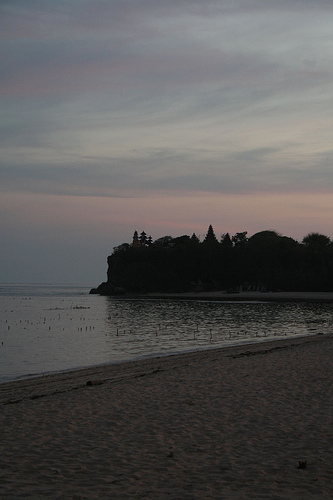
If I painted Aceh, I would paint it yellowish green and gray despite its golden sandy beaches and turquoise sea. I would paint a pointillist oil on canvas or otherwise with sharp and curvy almost calligraphic ink and pastels on cardboard. So much is hidden - not even intentionally concealed, but rather scattered and lost, hard to notice or recognise…
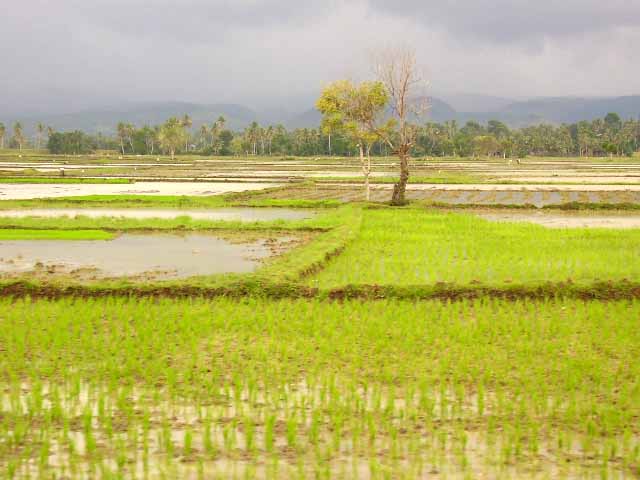
From the very start, I knew most of Aceh would remain unknown to me as anyone who stays only a few days there. So I tried the polsci trick: I read all about its politics, I checked previous student papers that I wrote on Indonesia and Aceh, I kept an eye on the newspapers and tried to use political science as my entry point to a somehat better understanding.

You see, impressions and politics is one and only one posting therefore…

By the time I was studying Southeast Asia, it was slowly becoming obvious that East Timor (Timor Leste) was going to separate from Indonesia. One of the most important questions was whether this authoritarian, multi-religious country of thousands of islands and hundreds of languages would unravel or not. Aceh was thought of as the next region to separate if there were such a domino effect. This is what I wrote then:

“However, Aceh differs from East Timor considerably with its largely Muslim population, and shared colonial history under the Dutch rule, like the rest of Indonesia. The separatist movement in Aceh basis its disagreements with the central government on two critical policies: the ruthless oppression of the military, and the channelling of revenues to Jakarta. Despite its regionalist leader Tengku Hasan M. di Tiro’s struggle against the central rule, it is unlikely that Aceh will separate from Indonesia. Firstly, di Tiro’s influence is declining as he has been away from the country for many years, as well as his age, 72 as of 2002. Moreover, Aceh has experienced a relatively quicker development of infrastructure and welfare compared to East Timor or Iriyan Jaya. It can be argued that the depletion of its LPG resources may necessitate the region to rely on a larger economic entity. Changes in the revenue distribution policies and lessening military pressure (increasing the autonomy of the region) can easily keep Aceh as a part of Indonesia, especially if the decentralisation of centre-region governance structure continues.”

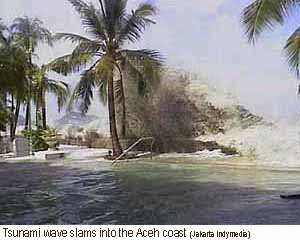
Of course, I couldn’t have guessed the tsunami’s effect. With the tsunami the whole political landscape of Aceh has changed once and for all –let’s hope not until the next disaster…

Wikipedia has some handy information regarding the colonial history of Aceh, but the more recent confrontation is covered by Z-Net (slightly abridged by myself) as of 2002 (for a shorter timeline visit CNN):

“The Indonesian province of Aceh, with a population of around 5 million, is located on the northern-most part of the island of Sumatra, about 1,000 miles from the Indonesian capital Jakarta. Located strategically on the sea lanes between south and east Asia, it became the centre of a powerful trading empire during the 16th and 17th centuries, and one of the earliest Islamic sultanates in southeast Asia.

The people of Aceh have a long history of resistance. For 150 years they thwarted Portuguese and Dutch military efforts to 'pacify' the region and incorporate it into their colonial empire. After Indonesia's independence in 1945, dissatisfaction with the central government eventually led to the granting of Special Region status, giving the Acehnese control over education, religion and adat (customary) law. However, the decision failed to be implemented. By the mid-1970s after huge natural gas reserves were discovered, blatantly unequal distribution of revenue drawn from the exploitation of these resources contributed to the formation of Gerakan Aceh Merdeka (GAM- Free Aceh Movement) in 1976 and open resistance to central government.

The Suharto regime responded with a campaign of brutality and repression, which reached a peak when Aceh was designated a 'military operations zone' from 1989 until the fall of Suharto in 1998. Thousands of Acehnese men, women and children were killed, tortured or disappeared. After the fall of Suharto, the people of Aceh spoke out publicly for the first time about the years of the terror and brutality, bringing them to national and international attention. Overwhelmed by this torrent of accusations, the head of the armed forces, General Wiranto, announced the end of DOM in August 1998 and apologised for all the abuses. However, neither the governments of Habibie nor Wahid, nor the military, took steps to respond to the demands for justice and compensation by the people of Aceh and no steps have been taken to bring those responsible to trial. During 1999 and 2000, a series of code-named military operations were conducted and there were several massacres in which scores of people were killed.

Exxon/Mobil

Aceh's natural gas has been exploited since 1971 by Mobil Oil, which in 1999 merged with Exxon to become Exxon/Mobil. It operates in partnership with the state oil company, Pertamina, which runs the liquified natural gas plant nearby. The installations are closely guarded by troops who have been responsible over the years for numerous abuses against villagers living in the vicinity of the plant. In June 2001, a lawsuit was filed in the US against the company on behalf of 11 plaintiffs living near the plants.

The growth of GAM

Meanwhile, as the Indonesian armed forces became increasingly discredited, the armed resistance, GAM, gained in strength and popularity. Its units now operate in all parts of Aceh and in large swathes of the province it is in effective control of village and local administrations.

Since late 1999, there has been a strong movement in favour of holding a referendum to determined Aceh's future status, as the peaceful way of solving the conflict.

The Negotiations

On the initiative of former president, Abdurrahman Wahid, negotiations were held between the Indonesian Government and GAM, leading to a 'Humanitarian Pause' in June 2000. The armed forces were never happy about this accord and the Pause barely affected the level of killings and the talks have now been suspended indefinitely.

Following a decision by Exxon/Mobil in March 2001 to suspend operations, putting at risk monthly revenues of $100 million and the possible loss of international markets, the armed forces prevailed upon a seriously weakened Wahid to issue a 'presidential instruction' to restore Indonesian administrative control. As pressure mounted for Wahid to be replaced by his vice-president, Megawati Sukarnoputri, the armed forces moved to sabotage what remained of the faltering peace process. During 2001, nearly two thousand people were killed, the vast majority civilians.

The Megawati Presidency

Unlike her predecessor, Megawati fully supported all-out military action to suppress threats to what she prizes above all else, maintaining the Unitary Republic of Indonesia. In late 2001, she ordered the troops 'to hold the country together' regardless of whether this means violating human rights.”

The tsunami led to a peace agreement between the government of Indonesia and the Free Aceh Movement (GAM), in August 2005. This was to some extent the result of an inflow of international development workers. Before the tsunami, the central government allowed no international visitors to Aceh. On the other hand, the inflow of development aid also had an influence. At the moment, the BBR, a governmental bank, is taking care of the resconstruction in Aceh and managing most of the development aid. In two years all this money will be left to the local government. The agreement between the government and the GAM seems to be around these lines: If the GAM wins the elections and quits its separatist claims the central government would not intervene with the results of the election. (democracy takes weird shapes and forms in the southeast of the globe…)
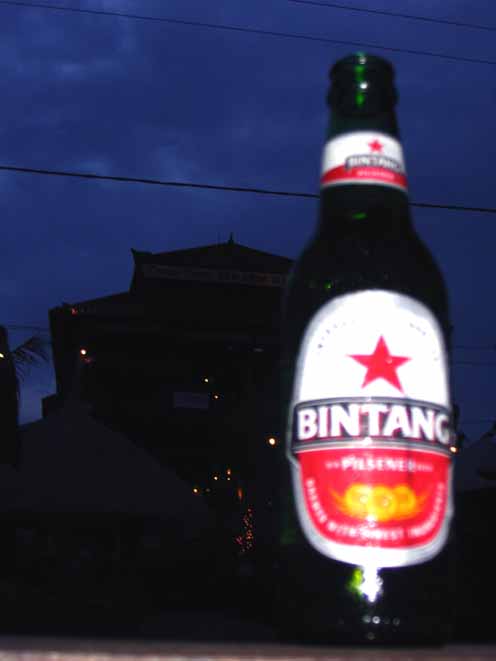
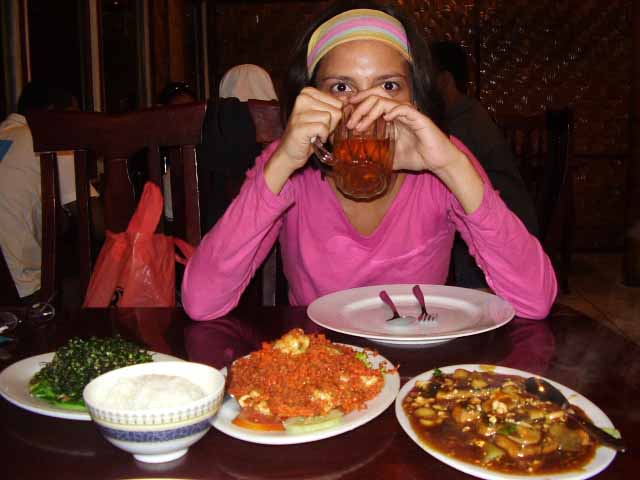
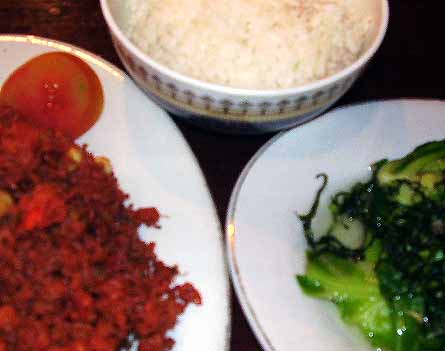
As of December 2006, the peace has held. In 1959 the Indonesian government yielded in part and gave Aceh a "special territory" status, giving it a greater degree of autonomy from the central government in Jakarta than most other regions of Indonesia have. For example, the regional government is empowered to construct a legal system independent of the national government. In 2003, a form of sharia, or Islamic law, was formally introduced in Aceh. In my opinion, this kind of autonomy is not playing into the hands of GAM leaders. Instead it is a way of creating power balance between religious leaders and the GAM, who has never demanded sharia law to be implemented, but rather economic reforms that would allow Aceh to utilise its revenues. Nor do the people seem too interested in sharia. The hotel I stayed in was suffocating with rules and norms hanging all over its walls in frames and photocopies, warning against men and women staying together without a marriage document, and it had a general oppressive character that I find very hard to describe but do recognise from a distant past. It was a scary place. Out on the street all Acehnese women and girls (including newly born girl babies) wear headscarves (and every now and then you see some of them taking it out the moment they are in their workplace, or a somewhat more comfortable environment). The clothing and eating rules of sharia doesn’t apply to Indonesians from other regions/religions or to foreigners so these women (myself included) don’t have to wear scarves but long sleeves and trousers. You can even find some beer (see pics), to go with the almost hedonistic food we have had. It was a surprise: I had my best ever Indonesian food in Aceh. It wasn’t primarily Acehnese, as they are more into curry, but the restaurant we have been to almost every night had delicacies ranging from sea cucumbers to wild looking whole fish and sea urchins and all sorts of weird vegetables that can hardly recall any further. Even tofu tasted great! The restaurant owner was the creator of this variety and told us what he experimented recently. I missed the usual fruit platters I got so used to nevertheless... This was one of the restaurants that served beer, and without any disturbance either. I mean, you didn’t feel bad drinking it, which is quite important. There were other places, too and I appreciate the flexibility people had. As a result even when dressed differently and not sharing their views on alcohol you don’t see a disturbing look in anyone’s face (when this happens, especially with women, I find it very appalling and hard to bear). So the election results were not a landslide towards more religious parties: the GAM won big time.
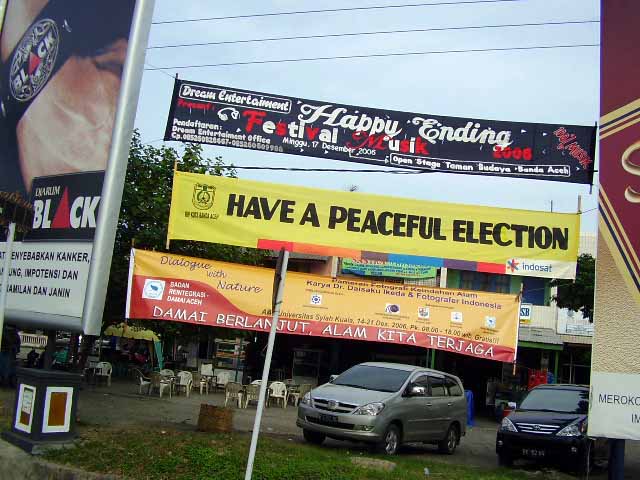
So, I was there right after the first democratic local elections of Aceh took place. The military was constantly passing comments on the media that Aceh was a part of Indonesia and it’d better remain so. The government was agreeing, and highlighting the ultra-democratic stance that they were taking regarding the election results. The Indonesians that I spoke to after I was out of Aceh were mostly playing the results down, saying that this population is so confused that “they simply want to try something new by electing the GAM.” I can understand that the oppression hasn’t only come from the central government in the last decades but also from a movement that required a lot of cash flow. Yet, I don’t think the people vote for the GAM out of hopelessness or ignorance. I would expect the village heads or traditional leaders having an influence on the voters and I would expect GAM to have impressed them in one way or the other. Patronage never dies…
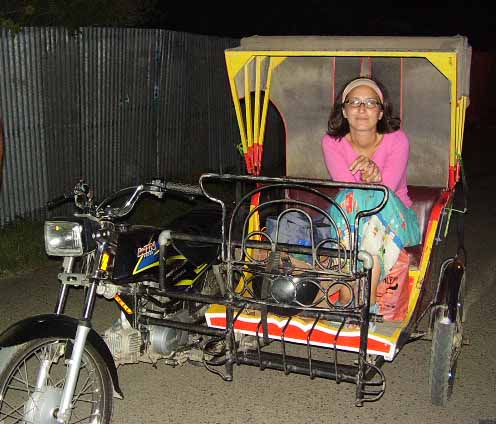
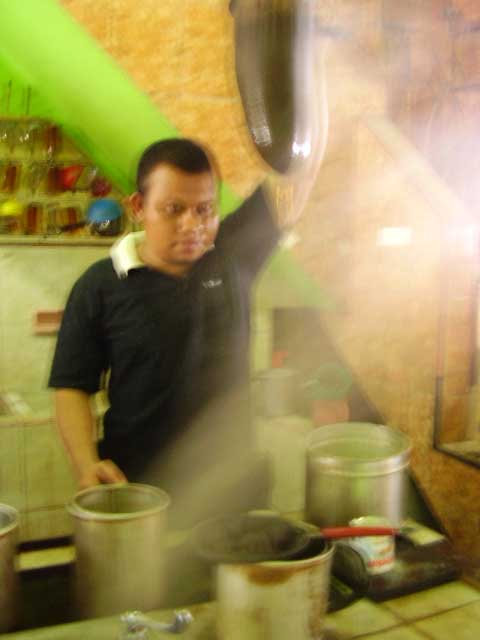
Let’s hope peace prevails… It’s a scary thing if the interests of big corporations are secured before the political stability, and that has been my worry in Aceh. Not only Exxon. The coffee corporations buy the world’s top quality coffee beans from Aceh (and it tastes too good to be true). They have the plantations restored and try to create ways to ensure constant high quality harvests. I would rather drink it the Acehnese way rather than the Starbucks and Nescafe versions. It was therefore very surprising not to be able to find any of it out of Aceh, in our next stops such as Kumai, Kalimantan, or Lombok but Nescafe in little plastic bags was available everywhere (literally!). The coffee shop was my last stop before the airport, and it’s a pity I bought only a few packs of Takengon coffee and not the whole of the stock ;) They made it in perverse looking filters (see pics) yet it was absolutely sobering and it was the best last stop I could imagine before taking off to Java to meet Harro and his mysterious gang and take a flight to Kalimantan to the Orang Utan Forests...

Sunday, January 14, 2007

Sunday Post

Greenpeace has a climate change video which I find quite cheesy but still like the metaphore.
Have a look.

Saturday, January 13, 2007

V2.B.P1= Aceh (the Tsunami & Relief Work: Till the Next Disaster)

My next stop was Aceh.
Banda Aceh, to be exact.

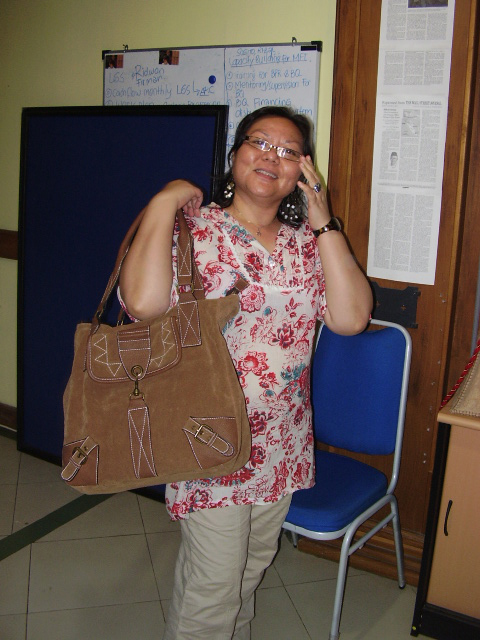
"Why on earth?" was the question I received from a number of friends, and although the main reason was that I wanted to see a friend of mine, Meynar, who is doing tsunami relief work for the last few years with MercyCorps there, I also thought that this would be one of the most interesting part of my trip. What you see in Bali is what you are allowed to see, and what you are expected to like (it doesn’t cancel out that it is marvellous). What you see in Java, are the very (very!) impressive natural and cultural heritages (which I skipped for this time, and I know I will go back to them), but what you see in Aceh is real life at its best (and worst). So that was the end of my tourist life in Indonesia and I got my ticket to Aceh, a little concerned about what it would be like under shariyah, a little excited to see Meynar again (in the pics), a little worried if I could bare the effects of the tsunami and the earthquake...

I wasn’t wrong. It was remarkable. I was there right after the first elections that were held in the tsunami- and conflict-hit region. The main reason of course, being Meynar, who not only allowed me to see her microfinance work there, but also gave me a great insight about the area, with our conversations as well as a tour of the projects, and landscapes. It was great to see development workers on the field, how our concepts merged and how researchers and implementers influenced one another.

If I were to part my story of Aceh into three, the main concepts would be the tsunami, the politics, and some impressions (though they are very interconnected I must admit). I can’t tell my story without these backgrounds, so I should start with the tsunami.

1. The Tsunami

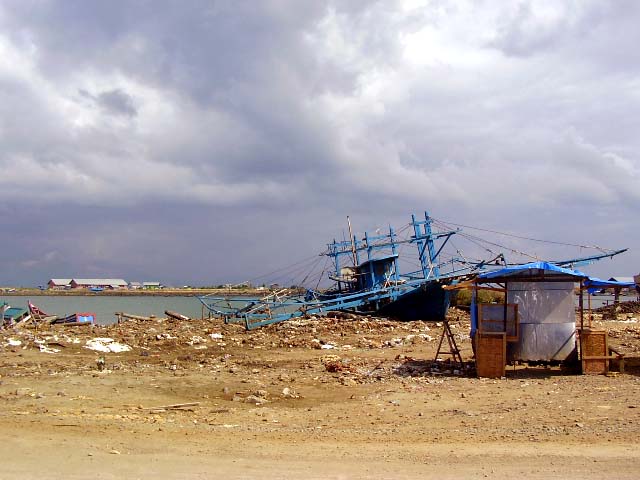
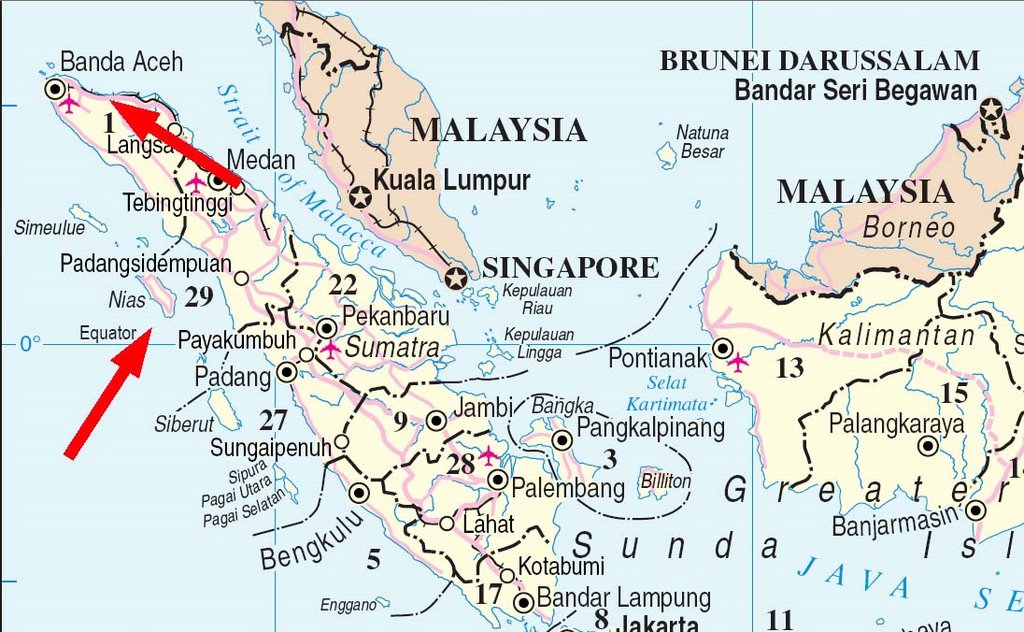
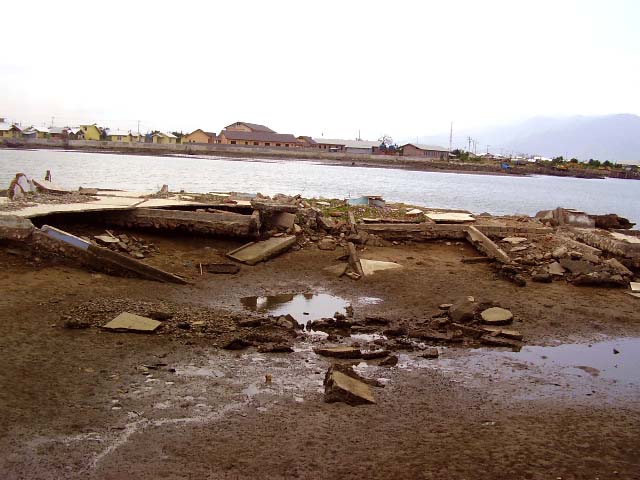
Aceh was the closest point of land to the epicenter of the massive 2004 Indian Ocean earthquake, which triggered a tsunami that devastated much of the western coast of the region, including part of the capital of Banda Aceh (see map). Over 200,000 people died, and over 500,000 were left homeless. This happened on a Sunday when most men and kids were at home, and women on the market. The kids couldn’t have resisted the strength of the tsunami. They were washed away with the 40m high waves. The men that died and were missing were the main wage-earner of their families, hence the social structure has been tremendously influenced. Some villages on the shore were destroyed so irreparably that the fishing communities cannot go back there, and need to find a different way of organising their livelihoods in the forests and mountains.

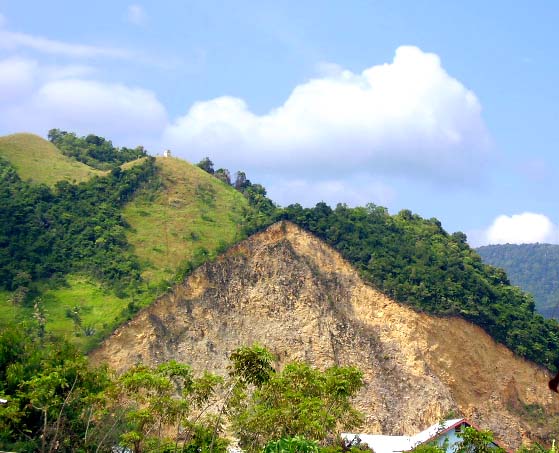
To demonstrate… The tsunami took a bite of this hill (“mountain” in a Dutch scale) and took it away.

It carried this floating electricity generator (which used to be sent back and forth between islands, wherever it is needed) 20 kms inland and now cannot be removed. The wave reached as far as 40km. inland.

After the tsunami, the short-term relief work has taken a few months, but in the long term a whole economy has vanished therefore the international aid was critical. The picture of the cardboard box on the right says “Tsunami is God’s way of reminding people to help one another”. Yet, the Achenese response was not fatalist at all: Many victims who survived say that it is a new start, there’s no point in whining and should start all over again. For these people the international aid is significant as it allows them to find the means to start new businesses. Some microfinance projects seem to work very effectively in reorganising a wiped out economy. This is particularly true for less agricultural parts of Aceh.

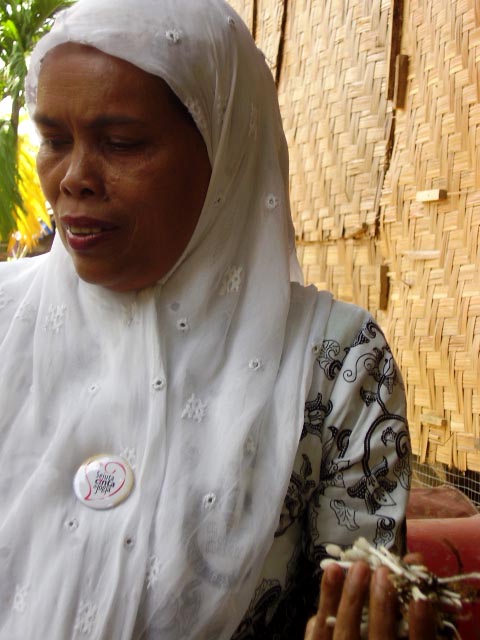
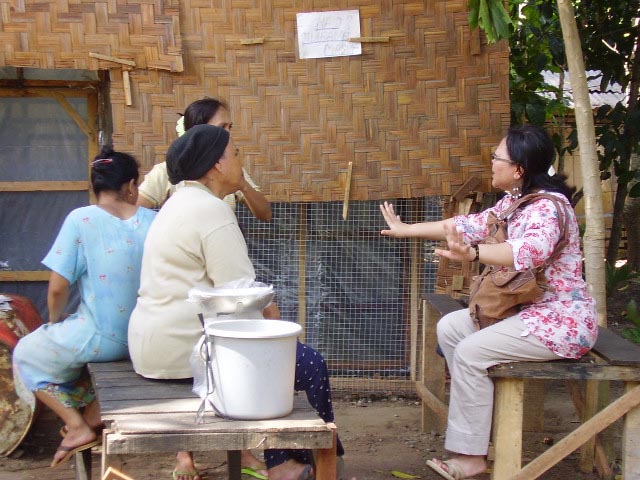
I was very impressed by two projects in particular: the mushroom project, and the village communities one. The mushroom project is a partnership between ILO and MercyCorps, which constructed an indoor mushroom growing building for 10 women of a village. It takes them only a week per month to take care of the mushrooms, which are hard to find and hence quite expensive in Aceh. They are so proud and happy about their work that they want to build more of them for more women and asked Meynar’s help to apply for some funds. A few pics:

The latter is the Village Communities project that MercyCorps and WWF were doing together in which they asked the village communities how they would like to reorganise their economies, assessing the ecological and social structures as well. They said bumped into a number of problems regarding the participation of vulnerable groups, but they were constantly making an effort to ensure some deliberation all the time. The way Acehnese villages were formed (possibly related to their colonial past) seems to help: There are youth groups, women’s groups, etc. in each and every community, which they can try to strengthen.

Did you donate for the tsunami relief? I did. I know a lot of people that did. Do have any ideas how your donation has been spent? Well, the donation I made to Red Crescent of Turkey was spent into boats that Acehnese people didn't know how to use, and to buildings they didn't bother moving into, as they were too small for Acehnese culture (and the rebuilding of a mosque around which noone lived, see pic). This is partly related to what they refer to as the spoilt market: There is so much choice for funds that most communities that have some kind of a project in mind can choose from among a number of donors. But more importantly, several people regarded the Turkish aid as very well organised and fast in the rescue missions, and quite insensible in the aftermath. The Turkish village as they call it, was deserted other than some construction workers putting Turkish flags on each house (pathetic). And sadly, there were several families living in one room huts (or a combination of huts as in the pic) rather than moving into those areas which were no longer residential.

The world of livelihood economy always amazes me (see Ümit's article on this published in Üç Ekoloji V4-in Turkish). It is real, however crude it might be at times. The cruelties are not hidden behind liquid concepts, shifting images, and hard work almost always pays. The world of the development workers there was a little different: quite luxurious, quite Western –as much as you can get-, but they were bridging so many gaps that that didn’t look disturbing to me. What I heard from almost all of them was that the amount of aid that was invested in Aceh has “spoilt” the market. The inflation rates were incredibly high, and everybody was wondering what will happen once the development agencies withdrew, i.e. Aceh’s current situation is very much dependent on the next disaster.

Monday, January 08, 2007

V2.A.P3= Sander's pics of Nusa Dua

Referring to the previous post, I've found out today that Sander has already named and "flicker"ed some of the photos from Nusa Dua. I know for sure that I took some of them, but surely he has the talent (and more experience) with his own camera.
The crab I was mentioning was certainly photographed by him for instance.
So were the full moon photos of our romantic dinner (which he felt out of place as he puts it -or thinks that he should) ;)This was the temple that we had as the view before the moonrise...
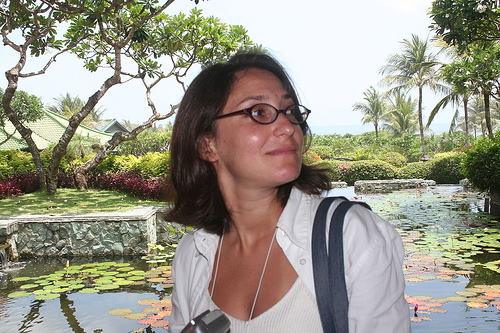
My picture at the Hyatt certainly wasn't taken by me either (I like this one. It's pretty rare that I look good OR like myself in pictures, this is somehow both).
And when I said the conference site was nice, this was what I meant...
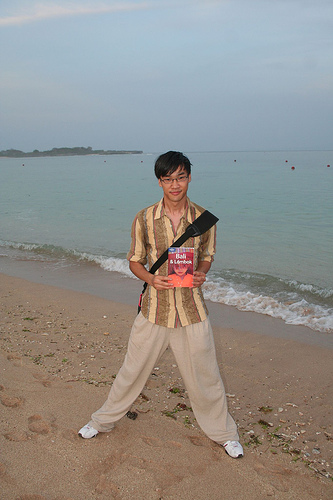
But I must have taken at least this one: Sander with "the Bible"... I don't know what we would do without our beloved Lonely Planet (despite the night in Aloha Inn)Thanks Sander.

Sunday, January 07, 2007

V2.A.P2 = From Seminyak to Nusa Dua

By the time I left my little enclave in Seminyak I have already achieved some of the things I wanted to do in this trip (more the internal one, but it always relates to the physical as well):

I did have long walks on the beach and a lot of writing on my life in Amsterdam –the kind of writing that requires some mental and physical distance.

I managed to resume horseriding, on Seminyak beach early in the morning before the beach was crowded.

I started to read Max Havelaar, or the Coffee Auctions of the Dutch Trading Company (@amazon), by far the best book I read about colonialism and one of the best novels I read.

The next leg of my trip was to Nusa Dua, a peninsula in the south of Bali located 40 kilometres from the capital city of Denpasar. The conference site was there so I had to take a taxi to the other side of the little tail of Bali. The Conference being the IDGEC Synthesis Conference, my reason for going to Bali in the first place.

IDGEC is a long-term international research project developed during the 1990s under the auspices of the International Human Dimensions Programme on Global Environmental Change (IHDP). IHDP is an international, interdisciplinary, non-governmental science programme dedicated to promoting, catalyzing and coordinating research on the human dimensions of global environmental change. IHDP takes a social science perspective on global change and it works at the interface between science and practice.

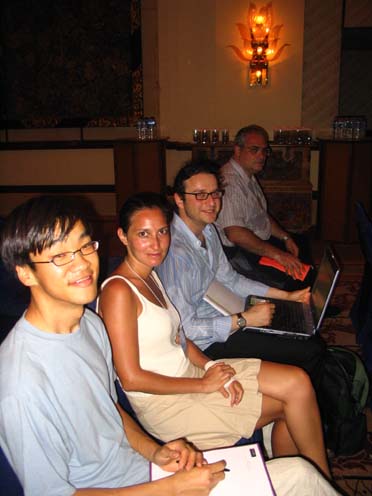
The conference was held in Grand Hyatt Bali Hotel but most PhD students stayed in a nearby hotel called Inna Putri Bali which was relatively less extravagant. The reason was that this hotel was cheaper and less luxurious and PhD students like making a point out of that. I am no different. I find it curious to fly from one continent to the other to discuss climate change, or to stay in a luxurious hotel to figure the ways in which science and practice of environmental issues can be brought together (pics from the hotel make my point). Yet, that’s the way it is and reading Science in Action (@amazon) by Bruno Latour and the Postmodern Condition (@amazon) by Jean-Francois Lyotard helped keep my dignity. Of course, the conference itself as well. It is always a great feeling to be below the average level of brightness around (yet, I wont go further into that as it would be professional gossiping ;) –and possibly bore you to death).

The results of doing those readings (but not emerging from their content), to my surprise were the following:

1. a few nice chats, and insights to previous works of my colleagues,

2. a lot of remarks and criticisms from colleagues who obviously found it useless to try to read these authors on the beach

3. a reminder that I shouldn’t travel with that many books (from my bag pack)

The results of doing those readings (this time related to their content) were the following:

1. figuring that I will not in the near-future read any further Lyotard, although I think the book was marvellous, simply because the relevance of the subject matter is not sufficient to motivate my curiosity and overcome the language barrier.

2. that I have to spend some more time reading Latour, I think he was the greatest discovery of my trip. I enjoyed looking at the institutions that I am involved in and how they shape and form myself and my work as well as that of people I share mental spaces with.

3. that I shouldn’t surrender: one can, and I believe I could, share parts of some thoughts, inspirations, questions, and difficulties with some friends around and sometimes even despite themselves. This does save one from being excluded (hence, demented and angry), at least in my case. It was, therefore, a tremendously rewarding experience.

4. and a bunch of little ideas that I will have to work on in the next few months.

Another great thing about the Conference was the start of my field work, which got me terribly excited. And lastly, I enjoyed getting some feedback about our multi-authored paper.

All in all it was a good conference even without mentioning the immense variety of tastes we have been exposed to. It was great to have fruit platter on the coffee breaks, and sunshine and a blue-green sea in the midst of flower gardens throughout the conference.

I should also cite a wonderful dinner with Sander before the conference started (a conversation on the issue of guilt in religion, some indescribably good food, a wonderful moonrise over the ocean, some bottles of Bintang –the star/beer of Indonesia, the main source of alcohol we had throughout the week-, huge crabs on the shore as we walked back, a night long chanting in the temple nearby, a small visit there and taking pictures of all these...), a walk with Fari on the possibilities of me understanding more of Lyotard and rest of life/work, meeting some people who I know and appreciate the work of in person, great Balinese dances we had a chance to watch, a late night chat with Harro (that helped me figure what I look like to unfamiliar eyes), nightswimming with the department and the luxury of seeing everyone less stressed and busy than usual, with the possible exception of Sander who seemed a little worried about his capabilities of networking. I know I can network and I don’t choose to. I think we should be able to relate at the level of ideas (and at times as individuals that enjoy talking, thinking, working on similar issues, or even just sharing the same physical environment). There is no need to ultra-professionalise the environment that we obviously find worth being in. I am afraid this also relates to my incapabilities of looking sharp in two seconds and impress people in a claculated manner. So I don’t play the game. And there are many people who don’t. I liked figuring that out in this conference. I understand his worry and I truly think he should be in conferences alone so as to test his capabilities and yet he will rejoice (he has a posting on this matter).

That was more or less all about my trip to Nusa Dua... Next, I went back to Kuta/Legian/Seminyak for a few days of solitude. How could I know that I would find an island in my head only a few weeks later where I would feel most wonderfully alone, and yet still with friends.

ps. last two pics are harro's click...

Saturday, January 06, 2007

somewhere i have never travelled...

e.e. cummings

somewhere i have never travelled, gladly beyond
any experience, your eyes have their silence:
in your most frail gesture are things which enclose me,
or which i cannot touch because they are too near

your slightest look easily will unclose me
though i have closed myself as fingers,
you open always petal by petal myself as Spring opens
(touching skilfully, misteriously) her first rose

or if your wish be to close me, i and
my life will shut very beautifully, suddenly,
as when the heart of this flower imagines
the snow carefully everywhere descending;

nothing we are to perceive in this world equals
the power of your intense fragility: whose texture
compels me with the colour of its countries,
rendering death and forever with each breathing

(i do not know what it is about you that closes
and opens; only something in me understands
the voice of your eyes is deeper than all roses)
nobody, not even the rain, has such small hands


The translation to Turkish, has been one of my favourite poems of all times, and so was the song... Thanks to Yeni Turku (their name probably comes form Nueva canción as of Victor Jara). I think I want to add that poem as well.

Yağmurun Elleri

Küçücük bir bakışın

Çözer beni kolayca

Kenetlenmiş parmaklar gibi

Sımsıkı kapanmış olsam

Yaprak yaprak açtırırsın

İlk yaz nasıl açtırırsa

İlk gülünü gizem dolu

Hünerli bir dokunuşla...

Hiçkimsenin yağmurun bile

Böyle küçük elleri yoktur

Bütün güllerden derin

Bir sesi var gözlerinin

Küçücük bir bakışın

Çözer beni kolayca

Kenetlenmiş parmaklar gibi

Sımsıkı kapanmış olsam

Başedilmez o gergin kırılganlığınla senin

Her solukta sonsuzluk ve ölüm

Yaprak yaprak açtırırsın

İlk yaz nasıl açtırırsa

İlk gülünü gizem dolu

Hünerli bir dokunuşla...


Thursday, January 04, 2007

V2.A.P1 = V(isit) 2.(Indonesia) A. (Bali) P(osting) 1 - Bali


Going to Bali after so many years was interesting. Returning to places (which I seem to be doing with several parts of the world) makes one notice the change… both internal and external that is. My first visit to Bali was in 2001, December and exactly five years later I was in the same airport, and in the same hotel (which I managed to find only on my second day there), on the same beach, ate at the same restaurants etc. This time I was much more enthusiastic about the food, much less interested in travelling around Bali, and aware that the rainy season was postponed for a month or so…

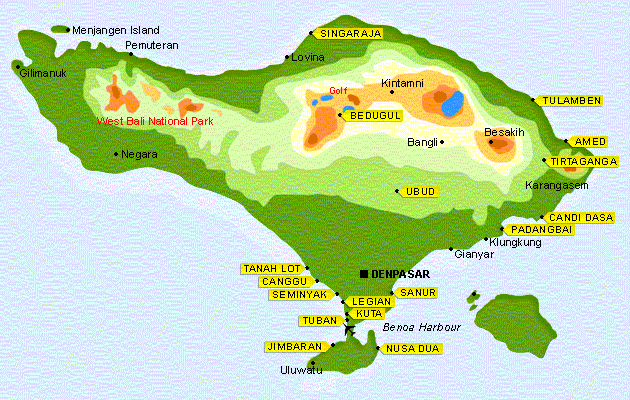
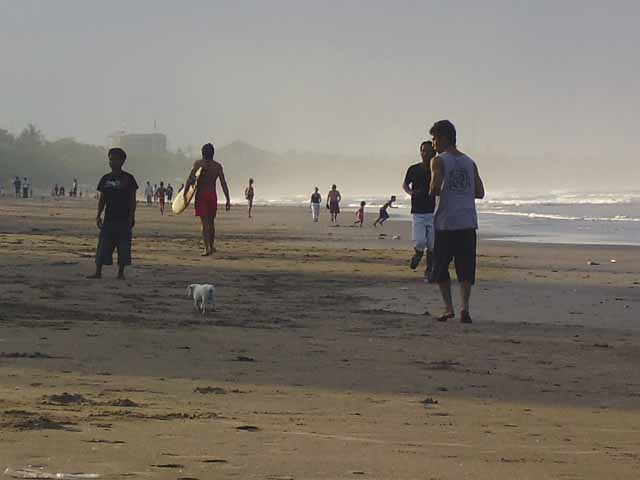
For the first few days, it was brilliantly sunny, I was mostly taking long walks on the beach, reading on the beach, watching people on the beach, eating all the tropical fruits I could find, again, on the beach. These days I spent in Legian and Seminyak. See the map.

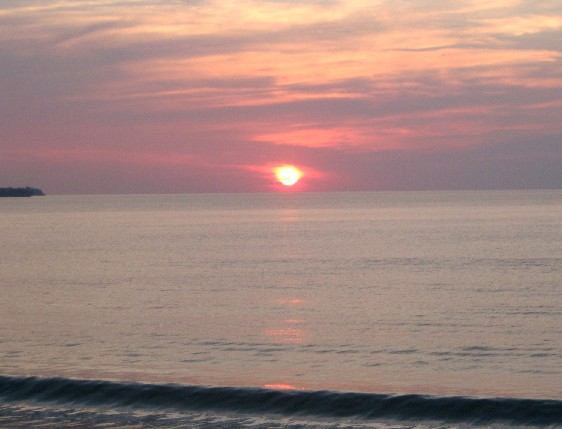
Legian and Seminyak are the adjacent beaches to the famous and tourist filled Kuta Beach. So it you want to stay away from at least the majority of the toursits, there is a point in refraining from Kuta, and sticking with these two northern beaches… Still, they are quite reasonable priced for a Western tourist, although you may get exhausted by the number of people that greet you and ask you questions, and rip you off… You get used to all that in a while and the sunsets always make up for any little problem you may experience (see pics).

What I had to get used, immediately after getting off my plane at the Denpasar Airport, was something subtler though. I had to relax, and manage not to think that everybody around the place was there to steal my time. It took me almost an hour to quit panicking about time and the restlessness slowly faded. So strong is the feeling/urge of doing things in fixed times in the Netherlands that it required some effort to put my impatient grey cells at ease. Then, it was much better. It took me an hour to figure out that I wouldn’t be going to Aceh in the dates that I wanted to. It took me even longer to find the hotel I was trying to find, but all that went well and I managed to read, and eat all the fruits I liked, hence feel pampered. I had some great talks with two people: 1. Kiki, once she quitted trying to sell me all the dresses she had in the basket that she carried on her head… We talked about skin colours (we basically wanted to exchange them), how it was to borne and not to borne children (she almost of my age and had 5, and was surprised at my reluctance of having any), and gendered economics through food and family matters. 2. The owner of my fave restaurant on the street I stayed, who was a man of 50, very talkative but almost in a non-Balinese way, that is, with and through content. We talked of politics, of course, and life matters, and he explained the distance between people and the political apparatus, and how it applies differently to peoples of different characters. In the Balinese case, he thought, the kind and gentle native culture would not be able to bridge that gap almost artificially created through the centralisation and militarisation of the country.

Bali is special, because it is a Hindu island, and if I am not mistaken the only one, in Indonesia. It shows. People are fine with most of the things you can do there, which is a feeling you have to say farewell to if you will travel to Muslim islands and particularly to shariyah-ruled parts (which I did later). It dates back to the end of the prehistoric period marked by the arrival of Hindu people from India around 100 BC. It was during this time that the complex irrigation system subak was developed to grow rice. Some religious and cultural traditions still in existence today can be traced back to this period (See picture).

Once you see the coral reefs around the island, the white beaches of the southern peninsula (the tail, as I like calling it) and the black northern beaches, and the rainforests in between, one cannot help but think what the place would look like before it was colonised and then modernised. It must have been heavenly.

Two Suicidal Wars with the Dutch (mostly from wikipedia):

The First European contact with Bali is thought to have been when Dutch explorer Cornelis de Houtman arrived in 1597, though a Portuguese ship had foundered off the Bukit Peninsula as early as 1585. Dutch rule over Bali came later, was more aggressively fought for, and they were never ultimately able to establish themselves as they had in other parts of Indonesia. In the 1840s, a presence in Bali was established, firstly in the island's north, by playing off various distrustful Balinese realms against each other. The Dutch mounted large naval and ground assaults first against the Sanur region and then Denpasar. The Balinese were hopelessly overwhelmed in number and armament, but rather than face the humiliation of surrender, they mounted a final defensive but suicidal assault, or puputan. Despite Dutch pleas for surrender, an estimated 4,000 Balinese marched to their death against the invaders. Afterwards the Dutch governors exercised little influence over the island, generally allowing local control over religion and culture to remain intact.

Japan occupied Bali during World War II during which time a Balinese military officer, Gusti Ngurah Rai, formed a Balinese 'freedom army'. Following Japan's Pacific surrender in August 1945, the Dutch promptly returned to Indonesia, including Bali, immediately to reinstate their pre-war colonial administration. This was resisted by the Balinese rebels now using Japanese weapons.

In 1946, the Battle of Marga was fought in central Bali. Colonel I Gusti Ngurah Rai, 29 years old, finally rallied his forces in east Bali at Marga Rana, where they made a suicide attack on the heavily armed Dutch. The Balinese battalion was entirely wiped out, breaking the last thread of Balinese military resistance. In 1946 the Dutch constituted Bali as one of the 13 administrative districts of the newly-proclaimed Republic of East Indonesia, a rival state to the Republic of Indonesia which was proclaimed and headed by Sukarno and Hatta. Bali was included in the ‘’Republic of the United States of Indonesia’’ when the Netherlands recognised Indonesian independence on Dec. 29, 1949. In 1956 Bali officially renounced the Dutch union and legally became a province within the Republic of Indonesia.

So much for now, and more to come shortly!
ps. All pictures belong to Harro...

Tuesday, January 02, 2007

Back from Indonesia


Or at least, almost back... Or at least most of me...

It was a long holiday for my standards, but it was even longer considering the number of islands I
travelled (5), and the density and changes in my moods, thoughts and emotions (infinite). Not to mention the variety among, and the biological and cultural diversity on each of those islands, namely Bali, Sumatra, Java, Lombok, and Gili Trawangan.

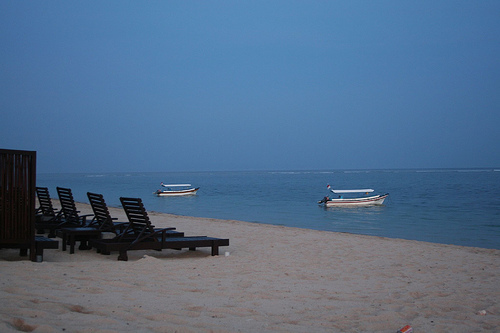
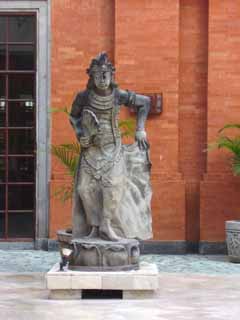
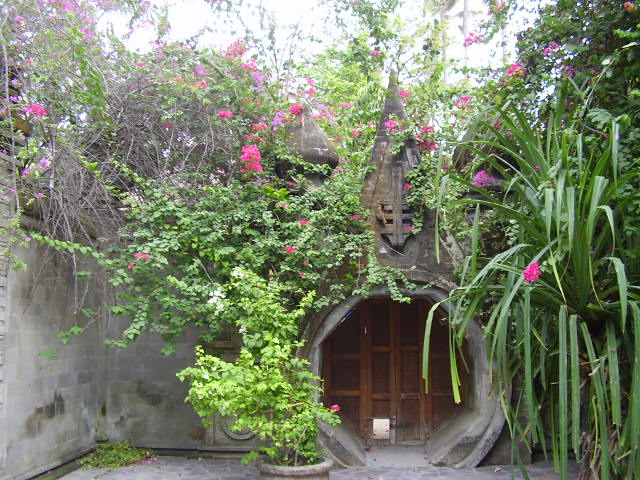
I will slowly write the story but for starters, here are some pictures from Bali, where I spent most of my time. I stayed there for the first two weeks of my indonesia trip and the last two days. I was in the ocean trying not to hear the countdown in the new years eve. I have been in Bali before, and maybe because of that it was the least intense part of my trip.

First few days I stayed at Seminyak (three bays north of Kuta beach, much less noisy, much less crowded, and a bit less touristic although you cannot easily say that for anywhere in the southern part of Bali). Then I was at the conference site in Nusa Dua for 5 days and then back in Seminyak. These photos are from those two weeks.

I'm still adjusting being back home and I cannot say it is not a painful process. I will try to relieve some of it through blogging each and every step of this brilliant trip in the next few days... But you can already check the blogs of other that were there with me. Sander (Yet I Will Rejoice) and Rob (The Change) already wrote about their own trips some of which I was lucky enough to share.
Wednesday, November 29, 2006

quOTe oF thE dAy

Learned and leisurely hospitality is the only antidote to the stance of deadly cleverness that is acquired in the professional pursuit of objectively secured knowledge. I remain certain that the quest for truth cannot thrive outside the nourishment of mutual trust flowering into a commitment to friendship.
Ivan Illich

Sunday, November 26, 2006

Dutch voters divided but not chaotic

The story: I wrote the following analysis for a newspaper, which turned it into something I could never write... hence, I felt like putting the original up my blog.

The results of Dutch Parliamentary elections of last Wednesday were interpreted as rather chaotic, even by experienced politicians like Finance Minister Gerrit Zalm of the Liberal Party. Although the formation process of coalition will not be smooth, the results do not necessarily indicate a chaotic message from the electorate. There were certain indicators pointing in this direction even before the elections. More importantly, there are some clear instructions that the Dutch electorate (albeit divided) gave to the next four years of Dutch politics.

Simply put, the results were a clear victory for the Socialist Party (SP) that almost tripled its seats in the 150-member parliament, while three other small parties received considerable support: the centre-left conservative ChristenUnie (from 3 to 6 seats), populist PVV (9 seats in the first elections they attended), and the novice animal-rights party PvdD (2 seats in their first elections). If the values and norms were the most important issues of the elections as the PM Balkenende, the leader of the biggest party CDA (Christian Democrats) has put, the results were not a surprise. All the winning parties are based on strong ethical stances –on whichever side of the spectrum they may be. Another common characteristic of these parties was their small but congenial components. The mass parties, on the other hand, particularly the Labour Party (PvdA) which showed signs of a much less coherent internal structure and disagreements among the cliques within the party, have lost votes. In either case the shift was from the centre to the both sides of the left-right spectrum.

Traditionally, Dutch political parties can be understood on a basis of left-right and conservative-progressive spectrum. While the electorate seems to have shifted from the right to the left, they also shifted towards more conservative parties, including the Socialist Party with its careful selection of mainly domestic issues. This may as well be regarded as another reason for the SP to succeed, as the major concern of the electorate has been domestic politics. While questioning the Labour and Liberals leaders on their own grounds, SP spurred the votes of the urban poor, as well as the electorate unsatisfied with the Labour that makes up 24% of SP’s votes. Neo-liberal policies of the last few years were obviously not further supported.

Throughout the pre-electoral debates, issues of foreign policy, Turkey’s accession into EU, or EU politics in general were downplayed. Despite a last minute leak of alleged torture incidents by army officials in Iraq, the wars in the Middle East were hardly ever mentioned. Either of the coalition possibilities however, will affect the EU integration (particularly that of Turkey) negatively. While the SP is pro-Turkey’s entrance, they are very reluctant on further integration, particularly on the basis of protection of Dutch workers, CU is against Turkish integration on the basis that Christian values are an integral part of European identity. In the 2005 referendum on the European Constitution the SP was the only left-wing party in parliament to oppose the European constitution. Most winners of the election were against the European Constitution as well.

Another issue that was not high on the agenda was that of immigration. While the PVV, a one-theme party of strong anti-immigration measures has won some 9 seats, in the post-election debates all possible coalition partners to CDA made it clear that they would not join any coalition with them. On the same debate, the word "Muslim" was not mentioned even once. The VVD, that promotes the principle of non-discrimination rather than the exercise of religion, and hard measures on issues of immigration has lost 6 of their 28 seats in the former parliament, and the luxury of being the second biggest party. The government announced plans to ban wearing the burqa and face veil in public, right before the elections without any major controversy. The news were not on the first pages of the newspapers, nor the issues of integration and immigration were a main issue in election preferences for more than 4% of the voters according to NIPO’s opinion polls. The policies regarding immigration are likely to remain strong (against the thousands of immigrants already in the legal process), and based on integration of the mainly Muslim groups from Turkey and Morocco, a shift from the progressive, tolerant, multiculturalist attitude that has declined since the murder of Pim Fortuyn 9-days before the 2003 elections. Fortuyn based his politics on the Dutch identity and suggested a strong stance for integration of Muslim communities, which caused a shift in most parties’ discourse on the issue.

The bargaining process has already started, yet to distil a government from these election results might be difficult for PM Balkenende, but this is the case in most central European countries. In the Netherlands, however, the issues are neither that of immigration nor of EU integration. The focus of the Dutch voters is homeland, which might as well bring about a less ambitious role for the country in international political arena.

Friday, November 24, 2006

The pope talks about the sanctity of life these days...
"Don't reject or abandon AIDS victims," Pope says, according to The Star, today.

How many lives could be saved if he only said "yes, it is all right to use condoms in marriages when one of the spouses are HIV infected." He didn't yet. Maybe he will in the next few months, and it will sound as if he did a good job after this many years. No, I'm afraid I do not regard popacy as a post, but rather kind of an incarnation of the same old story-teller. I know, it is weird. But it is also weird to need someone's approval to protect yourself from HIV/AIDS, and millions of people do need his approval.
According to the Guardian, it's estimated that 40 million people are HIV positive and 8,000 lives per day are lost due to AIDS. Their god obviously didn't think of situations in which "bringing life" and "being fruitful and multiply" also meant bringing the death to innocent individuals (particularly, those they appear to care most about: the unborn, as George Carlin says, the "sanctity of life" is something that is rather negotiable. Depends on who's doing the killings, and who's being killed)... Carlin continues:

"One phrase that come up quite a bit in abortion discussions is "sanctity of life." What about that? Do you think there's a thing as sanctity of life? Personally, I think it's a bunch of shit. Who says life is sacred? .....god? Great, but if you read your history you know that god is one of the leading causes of death and has been for thousands of years. Hindus, Moslems, Christians, Jews, all taking turns killing one another, because god told them it was a good idea. The sword of god, the blood of the lamb, Vengeance is mine, onward Christian soldiers. Millions of dead people.

All because they gave the wrong answer to the god question:

Do you believe in god?

No?..

BAM! Dead.

How about you? Do you believe in god?

Yes...

Do you believe in MY god?

No.

BAM! Dead!

My god has a bigger dick than your god.

For thousands of years all the bloodiest and most brutal wars have been based on religious hatred. Which of course, is fine with me; anytime "holy" people are killing one another, I'm a happy guy......but please, don't kill each other and give me that shit about sanctity of life."

The pope talks about the sanctity of life these days... Let's see if he will mention the word in his visit to Turkey, about which Merkel said Turkish government should be careful if they do not want trouble...

Which brings me back to our age old ego-centric question: Why are we here? (Carlin replies: Plastic!A...)

QuOtE of THe daY

The actual tragedies of life bear no relation to one's preconceived ideas. In the event, one is always bewildered by their simplicity, their grandeur of design, and by that element of the bizzare which seems inherent in them.
- Jean Cocteau

Thursday, November 23, 2006

Elections in the Netherlands

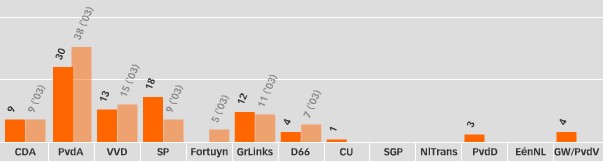
at the back (shades) you can see election results of 2003. for more info on parties, try wikipedia:

Parliamentary parties

Parties with representation in the Eerste Kamer, Tweede Kamer and European Parliament, as of September 2005:

And elections have pointed to one of the reasons why I like living in Amsterdam. Look at the voting of Amsterdamers (per cent):

Monday, November 20, 2006

QuoTE of ThE DAy

"[Philosophy is] the displacement and transformation of frameworks of thinking, the changing of received values and all the work that has been done to think otherwise, to do something else, to become other than one is. [It is] a way of interrogating ourselves".
M. Foucault
Polemics, politics, and problematisation,
1984:329

ps. I like
Foucault... he disturbs me. :)

Local Greens unveil party program


Turkish Daily News, November 20, 2006
by IŞIL SARIYÜCE, Istanbul

Generating the latest ripples in the Turkish political scene, the Greens discussed their future party platform in an open debate with the public in Istanbul during the weekend. Despite the low public turnout, general coordinator Kadir Dadan said he was hopeful that the Greens would run in Turkish local elections in 2009.

The point most emphasized in the meetings was the call for creating a new and democratic constitution that does not restrict liberties. Greens seek to have a party platform that ranges from domestic issues, such as ethnic conflicts, to global problems like climate change. The Greens have oriented their platform to focus on ecology, the economy, justice and fair income distribution.

The Green movement in Turkey began in the 1980s with opposition to the building of a thermal power plant in Gökova and a nuclear power plant in Akkuyu. The Green Party was officially recognized in Turkey between 1988 and 1994. Since 2002, the goals of improving political activities and establishing a new Green Party in Turkey have been revived, said Ümit Şahin, climate change coordinator.

Over the weekend Greens discussed their draft party program with the public, which according to attendees, was an unusual move in Turkish politics. The Green leaders stressed transparency and democratic structure, which they said has been lacking in Turkish political tradition. Debates about Turkey's EU membership were lively.

Anne de Boer, a local counselor of Dutch Green Left Party was in Istanbul to attend program conference of Greens. "There has been a lack of green color in the Turkish political scene" in the past and the Greens here are still not strong enough, said Boer. However, he said that the Greens have already achieved substantial progress, noting that they have a decentralized structure that differs from other Turkish parties and, as an observer member in the European Green Party, have strong international ties to other Green parties.

De Boer sees a positive path ahead for the Green movement, but finding their way into Turkish Parliament might require a change in Turkey's election law. "It has an anti-democratic character," he said, referring to the law that requires a party to win at least 10 percent of the vote in order to be represented in Parliament. Under this law, the majority of Turkish voters are not represented by the party they elected.

He said that when he first came to Turkey in 1984, he noticed posters that read, "Turkey is ready for Europe." "It was strange to see these just after the [1980] coup, but currently I believe Turkey is ready and that Europe needs Turkey."

In some areas such as environmental policy, negotiations in Turkey will be difficult, De Boer said, because special interest groups such as big companies will want to interfere and create obstacles. "The people who want a democratic Turkey must speak out" he said.

Sunday, November 19, 2006

On Whips...

Today's NY Times The Causus blogs had the following information:

"But what exactly IS a whip? He is the enforcer. And the favor bookkeeper. And the rules wonk. And, if you’re a congressman or woman, he might know even more about your district than you do. Cross him at your own peril. The term “whip” comes from the British House of Commons, which in turn took it from foxhunting. The “whipper-in” whips the dogs to keep them chasing the fox as a pack, and likewise the whip keeps the party members voting together. When a party’s leadership deems a particular roll call vote an important one, they call in the whip and his deputies, who first serve as pollsters, tallying how many members are on board, undecided, or against the measure (the “whip count”). "
Hence the whip being regarded as something powerful is no surprise. So what exactly IS a whip? Etymologically it comes from Middle English wippen, whippen; akin to Middle Dutch wippen to move up and down, sway, Old English wIpian to wipe.

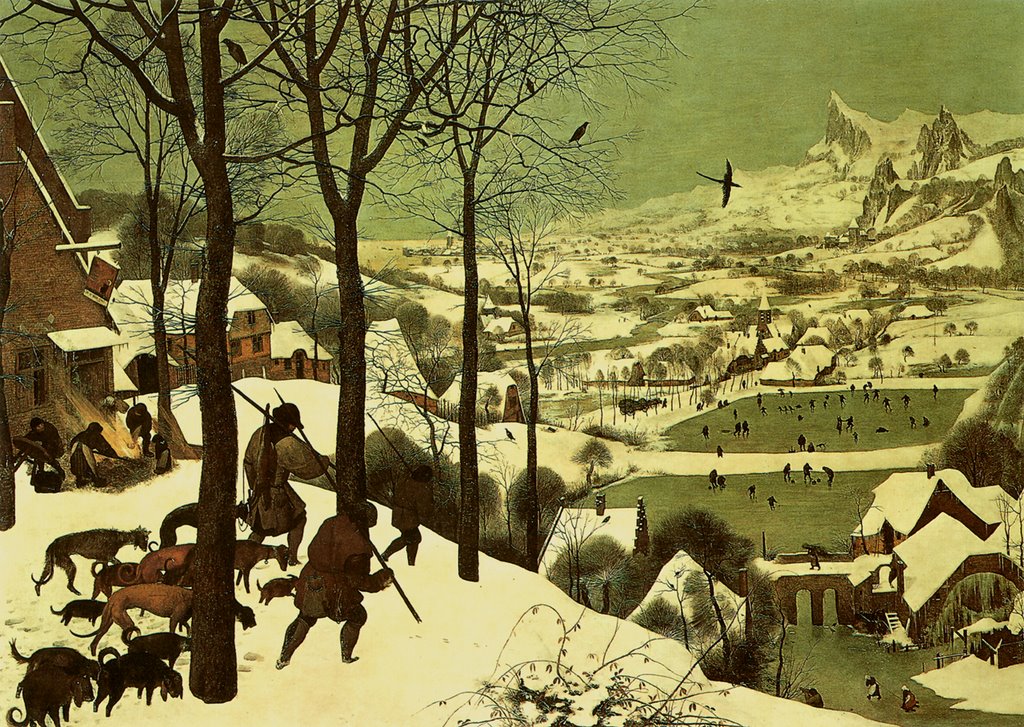
With a big leap I will post a painting that the issue reminds me of (If you are interested in Genre Painting, you probably already heard of Bruegel or Brueghel, otherwise click on the link below):

Pieter Bruegel's Hunters in the Snow, on which New Scientist says:

"A painting tells a thousand tales. Pieter Bruegel's hunting dogs, for example, look as dejected as their owners in his painting Hunters in the Snow. But it tells us something really important: that from the Renaissance on, art and literature seem to have been way ahead of science in granting animals - or at any rate, mammals - some acceptance of sentience. The secular intellectual world of Leonardo da Vinci, Michel de Montaigne, Erasmus, Shakespeare and Francis Bacon took animal sentience for granted.
Philosophers were the big nay-sayers. There is a clear line of argument for non-sentience running from Aristotle to St Thomas Aquinas and René Descartes to Immanuel Kant. They tended to draw a thick dividing line between non-human animals and humans, allowing the latter to use the former for whatever purpose they liked."

The link between secularism and non-human sentience is clear. Think about the place of men and his relation to nature in Descartes, Plato, and the "great" chain of beings. Yet, why are we still treating nature as our dominion remains to be further elaborated...

Friday, November 17, 2006

Ata demirer araknafobia

This only for friends that have been around Turkey for a while now. I couldn't post it for some reason but click here and enjoy Atademirer's Araknafobia video. :D
I haven't laughed so hard for sooo long... Finally subcultures on the move to popular public spheres in Turkey.

Tuesday, November 14, 2006

Israeli and Palestinian Women Demand an End to Attacks on Civilians

From UNIFEM website/ 11 November 2006

Members of the International Women’s Commission for a Just and Sustainable Palestinian-Israeli Peace (IWC) have issued the following appeal in response to the recent bombardment of houses in the Gaza Strip.

IWC IMMEDIATE CALL FOR ACTION IN GAZA
As Israeli, Palestinian and international women leaders and activists, members of the International Women's Commission dedicated to the goal of ending the occupation and achieving a just and sustainable Palestinian-Israeli peace based on a two-state solution, committed to the respect of international law, including relevant UN resolutions, human rights, and equality, we are outraged at the horrifying Israeli carnage against the Beit Hanoun civilians in Gaza Strip. The dawn bombardment of houses on November 8 in Beit Hanoun cost the lives of 19 civilians, among them 7 children and 6 women, and left dozens of innocents injured. Since the end of June, Israeli military assaults on civilians in Gaza have resulted in the killing of 383 Palestinians, including 68 children and 14 women.
As women we refuse to remain silent. As women we have an obligation to do everything possible to bring an end to the senseless use of force which threatens to destroy all options for creating a humane future for ourselves and our children.

WE CALL on the government of Israel to immediately cease its war on the civilian population of Gaza Strip, withdraw its armed forces, and end the siege. Attacks against civilians and collective punishment cannot under any circumstances be justified.
WE DEMAND that the international community, especially the UN Security Council, exercise its responsibility for the protection of human security, human rights, and human dignity according to international law, and intervene immediately to ensure the total withdrawal of Israeli forces and the complete cessation of all attacks.
WE ASK that an international verification force be dispatched to assure implementation of these decisions.
WE CALL on the Human Rights Council to dispatch a team to investigate the Beit Hanoun killings.
WE REAFFIRM our belief in the fundamental rights of all to live in an environment of peace and security, free from occupation, oppression, and the use of force as stipulated in international law and human rights conventions.
History has proven that sustained conflicts have no military solution.
WE APPEAL to the quartet to convene an international conference forthwith in order to return to the path of negotiations, and we ask all responsible parties to do everything in their power to begin this vital process.
Time is of the essence: our future, and that of our children, is in grave danger.
Ending the Israeli-Palestinian conflict is the foremost challenge and obligation of the international community today.

The International Women’s Commission for a Just and Sustainable Palestinian-Israeli Peace (IWC) is an international body of Palestinian, Israeli, and international women established in 2005 under the auspices of UNIFEM in the implementation of UN Security Council resolution 1325.

Sunday, November 12, 2006

Hi-tech crimes...

Just imagine that you lived a few centuries ago and found a newspaper from the future and read about this kind of a crime ... uh oh!

'Internet rape' paedophile jailed

Thursday November 9, 2006 Guardian Unlimited

A paedophile who took remote control of teenage girls' computers from his home and terrorised them into sending intimate images of themselves was jailed today for 10 years.

Posing as a teenage boy on internet chatrooms, Adrian Ringland, 36, would first get his victims' email addresses. He would then send them an email containing a virus that allowed him to hack into their computers.

Targeting girls on both sides of the Atlantic, he would visibly take control of their PCs, moving cursors around, switching on printers and, in one case, opening and closing the CD-Rom drawer.

He asked his terrified victims, who were as young as 14, to send him indecent images and pose for him on their webcams. Ringland would send the girls threatening messages if they did not comply, warning that he would crash their machines.

The case is thought to feature the most technologically advanced form of online grooming by a paedophile to have come before the British courts.

Ringland, a father of two, who police believe was self taught in IT skills, targeted teenagers in the UK and Canada, thousands of miles away from his home in Ilkeston, Derbyshire.

He was sentenced today at inner London crown court after pleading guilty to 20 charges relating to the internet abuse of three girls in Britain and a Canadian girl aged 14, including 10 offences of making indecent photographs of a child.

In each case, Ringland had posed as an "attractive and innocent-looking" teenager called Ant Jones, sending his victims photographs of a young boy, whom he claimed to be.

The photograph contained a virus, known as a Trojan, that allowed him to establish remote control of his victims' computers.

Lisa Wilding, prosecuting, told the court, the virus had enabled Ringland to "manipulate and distort" systems "in order to frighten the girls into doing as he ordered ... to terrorise them".

She said: "It is a startling tale that will bring home to you the horrors that lurk within the internet and the minds of some individuals who use it."

One of his victims said his considerable IT expertise reminded her of the science fiction film The Matrix. Another described her ordeal as "internet rape", while a third threatened to commit suicide in the wake of the abuse.

The court heard that once Ringland felt he had the children under his control, he forced them to provide ever more explicit pictures of themselves. He warned that refusal would result in the pictures he already had being sent to their friends, or that valuable files would be wiped from their computers.

Ringland was convinced he was untouchable, boasting to one child: "Call the cops ... they won't trace me."

However, he was caught after a 14-year-old Canadian girl, who lived in a remote rural area, ignored his threats and told her parents, who alerted the Royal Canadian Mounted Police.

After an extensive hi-tech investigation, officers eventually cracked the array of electronic defences Ringland had created and traced him to his home, 4,000 miles away.

Ringland, who was unemployed and living with his partner at the time, was eventually arrested by local police, and bailed. A random check later caught him having sex with a 14-year-old girl, whom he had also groomed on the internet.

Saturday, November 11, 2006

quoTE of THE DAy


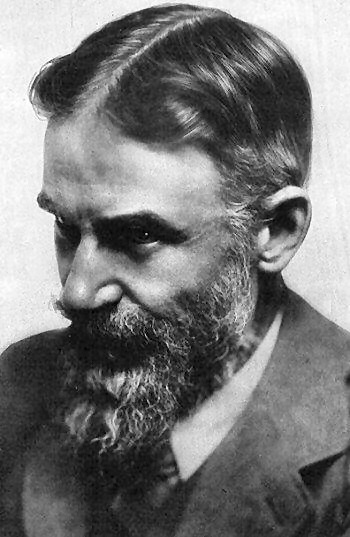
A fool's brain digests philosophy into folly, science into superstition, and art into pedantry. Hence University education.
George Bernard Shaw