There is no such thing as work-life balance. Everything worth fighting for unbalances your life.
Friday, August 03, 2012
quote of the day...


Wednesday, August 01, 2012
Sunday, July 29, 2012
Ani Difranco-not a pretty girl
"Not A Pretty Girl"
I am not a pretty girl
that is not what I do
I ain't no damsel in distess
and I don't need to be rescued
so put me down punk
maybe you'd prefer a maiden fair
isn't there a kitten stuck up a tree somewhere
I am not an angry girl
but it seems like I've got everyone fooled
every time I say something they find hard to hear
they chalk it up to my anger
and never to their own fear
and imagine you're a girl
just trying to finally come clean
knowing full well they'd prefer you
were dirty and smiling
and I am sorry
I am not a maiden fair
and I am not a kitten stuck up a tree somewhere
and generally my generation
wouldn't be caught dead working for the man
and generally I agree with them
trouble is you gotta have youself an alternate plan
and I have earned my disillusionment
I have been working all of my life
and I am a patriot
I have been fighting the good fight
and what if there are no damsels in distress
what if I knew that and I called your bluff?
don't you think every kitten figures out how to get down
whether or not you ever show up
I am not a pretty girl
I don't want to be a pretty girl
no I want to be more than a pretty girl

Wednesday, July 25, 2012

Sunday, July 22, 2012
A global democracy manifesto
DAVID HAYES , 27 June 2012 @ http://www.opendemocracy.net
"We want to be citizens of the world and not its mere inhabitants." A group of leading intellectuals has composed a document arguing that deeper and more extensive forms of democracy are essential to cope with the demands of globalisation and its associated transformations of governance. The document is being launched in a series of international events that begin at the London School of Economics (LSE) on 27 June 2012. It is published here, followed by a list of the fourteen author-signatories (eight of whom are also openDemocracy authors).
Manifesto for a Global Democracy
Politics lags behind the facts. We live in an era of deep technological and economic change that has not been matched by a similar development of public institutions responsible for its regulation. The economy has been globalised but political institutions and democracy have not kept pace. In spite of their many peculiarities, differences and limitations, the protests that are growing all over the world show an increasing discontent with the decision-making system, the existing forms of political representation and their lack of capacity for defending common goods. They express a demand for more and better democracy.
Global welfare and security are under threat. The national and international order that emerged from the end of World War II and the fall of the Berlin Wall has not been able to manage the great advances in technology and productive systems for the benefit of all humanity. On the contrary, we are witnessing the emergence of regressive and destructive processes resulting from the economic and financial crisis, increased social inequalities, climate change and nuclear proliferation. These phenomena have already affected negatively the lives of billions of human beings, and their continuity and mutual reinforcement menace the peace of the world and threaten the survival of human civilisation.
Global crises require global solutions. Within a social universe determined by globalisation, the democratic capabilities of nation-states and international institutions are increasingly restricted by the development of powerful global processes, organisations and systems whose nature is not democratic. In recent years, the main national and international leaders of the world have been running behind global events. Their repeated failures show that occasional summits, intergovernmental treaties, international cooperation, the multilateral system and all the existing forms of global governance are insufficient. The globalisation of finance, production chains and communication systems, and the planetary power reached by destructive technologies, require the globalisation of the political institutions responsible for their regulation and control, and the global crises require coherent and effective global solutions. That’s why we call for the urgent creation of new global agencies specialised in sustainable, fair and stable development, disarmament and environmental protection, and the rapid implementation of forms of democratic global governance on all the issues that current intergovernmental summits are evidently incapable of solving.
We need to move forward to new, more extensive and deeper forms of democracy. The current model of technological-economic globalisation must give way to a new one which puts these processes at the service of a fairer, more peaceful and more humane world. We need a new paradigm of development which has to be sustainable on a global basis and which benefits the poorest of humanity. In order to avoid the deepening of global crises and to find viable solutions to the challenges posed by globalisation we must move forward to more extensive and deeper forms of democracy. The existing national-state organisations have to be part of a wider and much better coordinated structure, which involves democratic regional institutions on all the continents, the reform of the International Court of Justice, a fairer and more balanced International Criminal Court and a United Nations Parliamentary Assembly as the embryo of a future World Parliament. Yet, this institutional change will not be successful if it only accrues from the actions of a self-appointed elite. On the contrary, it must come from a socio-political process open to all human beings, with the goal of a creating a participative global democracy.
Globalising democracy is the only way to democratise globalisation. Beyond our differences about the contents and appropriate methods to move towards a fairer and more stable world order, we the signatories share a strong commitment to the development of a global democracy. On behalf of Peace, Justice and Human Rights we do not want to be governed at the world level by those who have only been elected to do so at the national one, neither do we wish to be governed by international organisations which do not represent us adequately. That is why we work for the development of supranational political spaces and for regional, international and global institutions that live up to the challenges of the 21st century; institutions that express the different viewpoints and defend the common interests of the 7 billion people who shape humankind today.
We ask every human being to participate in the constitution of a global democracy. We share the appeal to "unite for global change" and for "real democracy" with the world social movements. Both postulates express the growing rejection of being governed by political and economic powers on which we have no influence. Autonomy and self-determination are not only valid at the local and national level. That’s why we champion the principle of the right to participate in the making of fundamental global decisions that directly affect our lives. We want to be citizens of the world and not its mere inhabitants. Therefore we demand not just a local and national democracy, but also a global democracy, and we commit to work for its development and call on all the political, intellectual and civil-society leaders of the world, all the democratic organisations, parties and movements, and all persons of democratic persuasion on the planet to actively participate in its constitution.
[signed]
Daniele Archibugi, Noam Chomsky, Richard Falk, David Held, Fernando Iglesias, Lucio Levi, Giacomo Marramao, George Monbiot, Heikki Patomäki, Mary Kaldor, Saskia Sassen, Richard Sennett, Vandana Shiva, Andy Strauss
Friday, July 20, 2012
Wednesday, July 18, 2012
Petition to put Bankers behind bars
Big banks have been rigging the interest rates on our mortgages and student loans! They've finally gone too far. The EU finance regulator is bringing new laws to put bankers behind bars for these crimes but needs popular support to face down the banking lobby and bring global change -- let's get 1 million people to stand with him in the next 3 days.
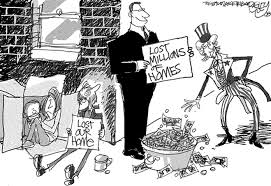 Big banks have been caught in a massive scam to rig global interest rates, ripping off millions of people on their mortgages, student loans and more! We'd go to jail for this, but Barclays bank has only been fined, and just a fraction of their profits! Outrage is mounting -- this is our chance to finally turn the tide of the banks' reign over our democracies.
The EU finance regulator, Michel Barnier is standing up to the powerful bank lobby and championing reform that would put bankers behind bars for fraud like this. If the EU goes first, accountability could quickly spread across the globe. But the banks are lobbying hard against it, and we need a massive surge of people power to drive these reforms through.
If we can get 1 million people to stand with Barnier in the next 3 days, it will give him momentum to face down the banking lobby and push governments to bring reform. Click below to sign, and our growing numbers will be represented by adding mock bankers to a jail right in front of the EU Parliament:
http://www.avaaz.org/en/bankers_behind_bars_f/?bYLWecb&v=15952
The full scale of the scandal is still unknown, but what we know is breathtaking: "Several" unnamed major banks were involved, and the rigging of the LIBOR interest rate, the rate on which many of the world's interest rates are based, affected the value of literally hundreds of trillions of dollars in investments. Barclays alone has admitted to committing this fraud "hundreds" of times.
For too long, our governments have been cowed by powerful banks who threatened to move elsewhere if challenged. For too long, banks have manipulated our market economies, tilting the playing field in their favour, and engaging in reckless risk-taking, secure in the knowledge that they could force governments to hand them our taxpayer money when they got into trouble.
The system is rigged, and that's a crime. It's time to put the criminals behind bars for it. It starts in Europe -- let's make it happen:
http://www.avaaz.org/en/bankers_behind_bars_f/?bYLWecb&v=15952
There may never have been a time in modern history when the big banks didn't have excessive and extraordinary power that they regularly abused. But democracy is on the march -- we've seen this march overcome tyrants across the world, and together, we'll help end the reign of the banks as well.
The EU finance regulator, Michel Barnier is standing up to the powerful bank lobby and championing reform that would put bankers behind bars for fraud like this. If the EU goes first, accountability could quickly spread across the globe. But the banks are lobbying hard against it, and we need a massive surge of people power to drive these reforms through.
If we can get 1 million people to stand with Barnier in the next 3 days, it will give him momentum to face down the banking lobby and push governments to bring reform. Click below to sign, and our growing numbers will be represented by adding mock bankers to a jail right in front of the EU Parliament:
http://www.avaaz.org/en/bankers_behind_bars_f/?bYLWecb&v=15952
The full scale of the scandal is still unknown, but what we know is breathtaking: "Several" unnamed major banks were involved, and the rigging of the LIBOR interest rate, the rate on which many of the world's interest rates are based, affected the value of literally hundreds of trillions of dollars in investments. Barclays alone has admitted to committing this fraud "hundreds" of times.
For too long, our governments have been cowed by powerful banks who threatened to move elsewhere if challenged. For too long, banks have manipulated our market economies, tilting the playing field in their favour, and engaging in reckless risk-taking, secure in the knowledge that they could force governments to hand them our taxpayer money when they got into trouble.
The system is rigged, and that's a crime. It's time to put the criminals behind bars for it. It starts in Europe -- let's make it happen:
http://www.avaaz.org/en/bankers_behind_bars_f/?bYLWecb&v=15952
There may never have been a time in modern history when the big banks didn't have excessive and extraordinary power that they regularly abused. But democracy is on the march -- we've seen this march overcome tyrants across the world, and together, we'll help end the reign of the banks as well.
Sunday, July 01, 2012
Hasankeyf ve Amazon için Küresel Kampanya Başlıyor

Doğa ve insan yaşamında geri dönülmez yıkımlara neden olan büyük barajlara karşı birlikte mücadele etme kararı alan baraj karşıtları ve sivil toplum örgütleri bundan sonra "Damocracy" adlı kampanya altında Hasankeyf ve Amazon ormanları için birlikte mücadele edecek. Küresel ölçekte yürütülecek kampanyada Doğa Derneği, Amazon Watch, Rivers International ve çok sayıda Brezilyalı topluluk ile gönüllüler ve dünyanın çeşitli ülkelerinden aktivistler yer alıyor.
Büyük barajların durdurulması için dünya kamuoyunu harekete geçirmeyi hedefleyen "Damocracy" kampanyası, aynı zamanda barajların doğaya, kültüre ve insanlara etkisine dikkat çekmeyi amaçlıyor. Dünyanın akciğerleri Amazon’un önemli bir bölümünü tehdit eden Belo Monte ve medeniyetin beşiği Dicle Vadisi'yle birlikte Hasankeyf’i yok edecek Ilısu Barajı küresel kampanyanın odağını oluşturuyor.
Bir avuç kazanç uğruna şirket ve devletlerin, Rio+20 zirvesinde barajları dünyanın önüne “yenilenebilir enerji’’ adı altında “yeşil ekonomi”nin bir parçası olarak sunma niyetinde olduklarını belirten Doğa Derneği Başkanı Güven Eken, “Doğanın ve insan yaşamının geleceğini tehlikeye atan devlet ve şirketlerin yıkıcı baraj politikalarına karşı dünya halklarıyla birlikte mücadele etme kararı aldık. Bu mücadelenin adı "Damocracy" olacak. Dünyanın akciğerleri Amazon Ormanları ve medeniyetin beşiği Dicle Vadisi için pek çok sivil girişim ortak mücadele edecek” dedi.
Tuesday, June 19, 2012
 | |
| daha fazla bilgi icin buraya tiklayin |
23 Haziran 2012, Cumartesi
09.00 Kayıt
09.15-09.30 Açılış Konuşması, Ulrike Dufner, Heinirch Böll Stiftung Derneği
09.30-10.00 Ana Konuşmacı, Wolfgang Merkel, Berlin Sosyal Bilimler Araştırma Merkezi
10.00-12.30 Birinci Panel: Dünyada ve Türkiye’de Demokrasi Tartışmaları
Dünyada Demokrasinin Durumu ve Küresel Sorunlar
Susan Corke, Freedom House
Türkiye’de Demokrasinin Sorunları
Fuat Keyman, Sabancı Üniversitesi
Türkiye’de Demokrasiye Dışarıdan Bakış
Claude Weinber, Heinrich Böll Stiftung Derneği, Brüksel
Moderatör: Bekir Ağırdır, Konda Araştırma ve Danışmanlık
12.30-13.30 Ara
13.30-16.00 İkinci Panel: Doğrudan Demokrasi ve Katılımcılık
TBMM Araştırması: Bir Doğrudan Demokrasi Aracı Olarak Referandum
Ahmet Yıldız, TBMM
Referandum Siyasal Katılımı Artırmanın Bir Yolu Olabilir mi?
Ersin Kalaycıoğlu, Sabancı Üniversitesi
Doğrudan Demokrasi Aracılığıyla Siyasal Katılımı Arttırmak
İlker Gökhan Şen, Anadolu Üniversitesi
Moderator: Ulrike Dufner, Heinrich Böll Stiftung Derneği
16.00-16.15 Çay-Kahve Arası
16.15-18.45 Üçüncü Panel: Merkeziyetçilik Siyasal Katılım Açısından Bir Sorun mu?
Merkeziyetçilik-Federalizm ve Katılımcılık
Oktay Uygun, Maltepe Üniversitesi
Yerel ve Bölgesel Demokrasi
Harald Baldersheim, Oslo Üniversitesi
Katılımcılık Yoluyla Yerelin Güçlendirilmesi
Fikret Toksöz, TESEV
Moderator: Banu Güven, Gazeteci
24 Haziran 2012, Pazar
10.00-12.00 Dördüncü Panel: Yurttaş Hareketleri, Sivil Toplum ve Katılımcılık
Yurttaşların Demokrasinin Şekillendirilmesindeki Rolü
Anna Wohlfarth, Bertelsmann Vakfı
Yurttaş Katılım Ağları
Feray Salman, İHOP
Sivil Toplum, Siyasi Partiler ve Katılımcılık
Dirk Jörke, Greifswald Üniversitesi
Moderator: Coşkun Üsterci, TİHV
12.00-13.00 Ara
13.00-15.00 Beşinci Panel: Gençlik, Sosyal Medya ve Katılımcılık
Siyasal Katılım İçin Sosyal Medya Fırsatı
Falk Lüke, Dijital Toplum Derneği
Türkiye’deki Gençler ve Siyasal Katılım
Nur Kırmızıdağ, SETA Vakfı
Türkiye’de Gençlik, Sosyal Medya ve Siyasal Katılım
Esra Arsan, Bilgi Üniversitesi
Moderator: Yonca Verdioğlu, Heinrich Böll Stiftung Derneği
Re-investigate Dutch role in Indonesia, scholars say
© Radio Netherlands Worldwide
A new, comprehensive
investigation should be launched into conduct of the Dutch military in the
former Dutch East Indies in the years 1945-1949. This is the conclusion reached
by three Dutch research institutes.
The directors of the Institute for War Documentation
NIOD, the Dutch Institute for Military History and the Royal Netherlands
Institute of Southeast Asian and Caribbean Studies KITLV, told the Dutch daily
newspaper that it is essential that further investigation take place, because
the controversy over the role the Dutch military played in the region
continues.
The three institutes estimate that a new investigation
would cost 2 to 3 million euros and take about three years to complete. The
directors point out that it would be essential that Indonesian historians and
researchers be consulted.
Last year, the Netherlands formally apologised and
paid damages for the Rawagede massacre, in which the entire male population of
that village, 431 people, were murdered by Dutch soldiers. Last month, a group
of Indonesian families began proceedings to hold the Netherlands responsible
for another bloodbath in South Sulawesi.
Monday, June 18, 2012
Friday, June 15, 2012
Thursday, June 14, 2012
Elinor Ostrom's final article: Green from the Grassroots

Much is riding on the United Nations Rio+20 summit. Many are billing it as Plan A for Planet Earth and want leaders bound to a single international agreement to protect our life-support system and prevent a global humanitarian crisis.
Inaction in Rio would be disastrous, but a single international agreement would be a grave mistake. We cannot rely on singular global policies to solve the problem of managing our common resources: the oceans, atmosphere, forests, waterways, and rich diversity of life that combine to create the right conditions for life, including seven billion humans, to thrive.
CommentsWe have never had to deal with problems of the scale facing today’s globally interconnected society. No one knows for sure what will work, so it is important to build a system that can evolve and adapt rapidly.
CommentsDecades of research demonstrate that a variety of overlapping policies at city, subnational, national, and international levels is more likely to succeed than are single, overarching binding agreements. Such an evolutionary approach to policy provides essential safety nets should one or more policies fail.
CommentsThe good news is that evolutionary policymaking is already happening organically. In the absence of effective national and international legislation to curb greenhouse gases, a growing number of city leaders are acting to protect their citizens and economies.
CommentsThis is hardly surprising – indeed, it should be encouraged.
CommentsMost major cities sit on coasts, straddle rivers, or lie on vulnerable deltas, putting them on the front line of rising sea levels and flooding in the coming decades. Adaptation is a necessity. But, with cities responsible for 70% of global greenhouse-gas emissions, mitigation is better.
CommentsWhen it comes to tackling climate change, the United States has produced no federal mandate explicitly requiring or even promoting emissions-reductions targets. But, by May last year, some 30 US states had developed their own climate action plans, and more than 900 US cities have signed up to the US climate-protection agreement.
CommentsThis grassroots diversity in “green policymaking” makes economic sense. “Sustainable cities” attract the creative, educated people who want to live in a pollution-free, modern urban environment that suits their lifestyles. This is where future growth lies. Like upgrading a mobile phone, when people see the benefits, they will discard old models in a flash.
CommentsOf course, true sustainability goes further than pollution control. City planners must look beyond municipal limits and analyze flows of resources – energy, food, water, and people – into and out of their cities.
CommentsWorldwide, we are seeing a heterogeneous collection of cities interacting in a way that could have far-reaching influence on how Earth’s entire life-support system evolves. These cities are learning from one another, building on good ideas and jettisoning poorer ones. Los Angeles took decades to implement pollution controls, but other cities, like Beijing, converted rapidly when they saw the benefits. In the coming decades, we may see a global system of interconnected sustainable cities emerging. If successful, everyone will want to join the club.
CommentsFundamentally, this is the right approach for managing systemic risk and change in complex interconnected systems, and for successfully managing common resources – though it has yet to dent the inexorable rise in global greenhouse-gas emissions.
CommentsRio+20 has come at a crucial juncture and is undoubtedly important. For 20 years, sustainable development has been viewed as an ideal toward which to aim. But the first State of the Planet Declaration, published at the recent mammoth science gathering Planet Under Pressure, made it clear that sustainability is now a prerequisite for all future development. Sustainability at local and national levels must add up to global sustainability. This idea must form the bedrock of national economies and constitute the fabric of our societies.
CommentsThe goal now must be to build sustainability into the DNA of our globally interconnected society. Time is the natural resource in shortest supply, which is why the Rio summit must galvanize the world. What we need are universal sustainable development goals on issues such as energy, food security, sanitation, urban planning, and poverty eradication, while reducing inequality within the planet’s limits.
CommentsAs an approach to dealing with global issues, the UN Millennium Development Goals have succeeded where other initiatives have failed. Though not all MDGs will be met by the target date of 2015, we can learn a great deal from the experience.
CommentsSetting goals can overcome inertia, but everyone must have a stake in establishing them: countries, states, cities, organizations, companies, and people everywhere. Success will hinge on developing many overlapping policies to achieve the goals.
CommentsWe have a decade to act before the economic cost of current viable solutions becomes too high. Without action, we risk catastrophic and perhaps irreversible changes to our life-support system.
CommentsOur primary goal must be to take planetary responsibility for this risk, rather than placing in jeopardy the welfare of future generations.
CommentsElinor Ostrom passed away on June 12, 2012.
Wednesday, June 13, 2012
you go boys...
Tournament statistics
 Netherlands X Germany
0 Goals scored 1
28 Total attempts 12
8 Attempts on target 4
20 Attempts off target 8
0 Attempts blocked 0
1 Attempts against woodwork 0
11 Corners 2
1 Offsides 1
1 Yellow cards 2
0 Red cards 0
8 Fouls committed 14
11 Fouls suffered 18

Monday, June 11, 2012
Chinese Manga: The Buffalo Boy's flute
The Buffalo Boy's Flute is a Chinese animated short,
originally released in 1963, and directed by Te Wei, one of China's most
prominent animation auteurs. This was the second film made using the
"brush painting" animation technique, with the first being Tadpoles
Looking For Their Mother, in 1960. The technique was developed by the artists
at Shanghai Animation Film Studio beginning in the late 50s; although details
of how the animation was achieved are still speculated on today, the actual
technique is kept secret by the studio. Despite being banned shortly after its
release (because it "didn't reflect the class struggle, and thus would
numb the consciousness of the public") The Buffalo Boy's Flute remains one
of China's most famous and acclaimed animated films.
Saturday, June 09, 2012
Friday, June 01, 2012

Wednesday, May 23, 2012
waiting sucks... (the countdown has started!)
don't cry, we're almost there...
living forever, one mistake at a time...
living forever, one mistake at a time...
Monday, May 21, 2012
Bir Demokrasi Meselesi Olarak Nükleer Santraller
Sosyal Bilimciler Tartışıyor: Bir Demokrasi Meselesi Olarak Nükleer Santraller
31 Mayıs 2012 Perşembe, 14:00-17:30
Cezayir Restoran, Hayriye
31 Mayıs 2012 Perşembe, 14:00-17:30
Cezayir Restoran, Hayriye
Şeffaflık Derneği tarafından 31 Mayıs günü Cezayir Restoran’da nükleer santralleri “Bir Demokrasi Meselesi Olarak Nükleer Santraller” başlığıyla ele alan/tartışan bir toplantı düzenlenecektir. Toplantının amacı, toplumun tamamını ilgilendirmesine rağmen teknik ve tartışılmaz bir konu gibi tanıtılagelen nükleer santraller konusunu demokrasi, bilgiye erişim, şeffaflık ilkeleri açısından değerlendirmektir. Aşağıda konuşmacı listesini bulabileceğiniz bu etkinliğimizde sizleri görmekten mutluluk duyacağız.
Program
14:00 Açılış, E. Oya Özarslan, Şeffaflık Derneği Yönetim Kurulu Başkanı
14:15 Panel
Konuşmacılar:
Prof. Dr. Erhun Kula, Bahçeşehir Üniversitesi
Pınar Ertor, Boğaziçi ÜniversitesiDoç. Dr. Semra Cerit Mazlum, Marmara Üniversitesi (tbc)
Moderatör: Ümit Şahin, Yeşiller Partisi Eşsözcüsü
15:45-16:00 Ara
16:00 Panel
Konuşmacılar:
Özgür Gürbüz, Heinrich Böll Vakfı
Pelin Cengiz, Taraf Gazetesi (tbc)
Mahir Ilgaz, Açık Radyo
Moderatör: Hande Özhabeş, Şeffaflık Derneği
17:30 Kapanış
Daha detaylı bir program önümüzdeki günlerde paylaşılacaktır.
Bilgi için:
Murat Can Tonbil0212-2405281mcantonbil@gmail.com

Sunday, May 20, 2012
Yabancılar ve Uluslararası Koruma Kanunu Tasarısı Hepimizi Ilgilendiriyor
Bakanlar Kurulu onayı ve Başbakan Recep Tayyip Erdoğan imzasıyla 03.05.2012 tarihinde TBMM’ye sevk edilen Yabancılar ve Uluslararası Koruma Kanunu Tasarısı metni ve kanun gerekçesini okumak icin tiklayin.
Kanun 15 Mayıs 2012 tarihinde TBMM başkanı
tarafından komisyonlara gönderildi. Ayrımcılık maddesi tamamen çıkmış,
geri gönderme merkezlerinde stk yok, tebligat kanununa açık referans yok
ve en önemlisi şartlı mültecilik devam. Yani Türkiye Avrupa Konseyi
üyesi ülkeler dışında mülteci kabul etmiyor. Sınırdışı etmede, vize vermemede
"kamu düzeni, kamu sağlığı, güvenliği" vb. gibi istenilen tarafa cekilebilecek maddeler var. Pek çok
temel koruma ise ikincil mevzuata yani kamu yetkilisinin keyfine havale
edilmiş.
Esas Komisyon: İçişleri Komisyonu
Tali Komisyonlar:
Adalet Komisyonu
Avrupa Birliği Uyum Komisyonu
Dışişleri Komisyonu
İnsan Haklarını İnceleme Komisyonu
Plan ve Bütçe Komisyonu
Sağlık, Aile, Çalışma ve Sosyal İşler Komisyonu
Milli Eğitim, Kültür, Gençlik ve Spor KomisyonuFriday, May 18, 2012
how governments protect their citizens -snippet of the day
From Wikipedia:
"Oxycodone abuse skyrocketed after the [US Food and Drug Administration] approval of Oxycontin by Purdue Pharma in 1995. Oxycontin is a formulation of nearly pure oxycodone available in up to 80 mg in one pill, developed to provide 12 hours of time-release pain relief. Abusers quickly learned that you could crush the pill to release pure oxycodone, which allowed larger doses and by additional routes of administrations such as intravenous and intranasal. By 2001, sales of OxyContin in the U.S. exceeded $1 billion per year.

In Canada, deaths from opioid pain relievers increased from 13.7 deaths per million residents in 1991 to 27.2 deaths per million residents in 2004, which may be related to the spread of OxyContin.
Several class action suits across Canada have been launched against the Purdue group of companies and affiliates. Claimants argue that the pharmaceutical manufacturers did not meet a standard of care and were negligent in doing so. These lawsuits reference earlier judgments in the United States, which held that Purdue was liable for wrongful marketing practices and misbranding. Since, 2007 the Purdue companies have paid over 650 million dollars in settling litigation or facing criminal fines.
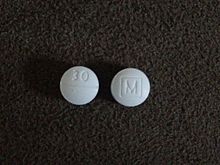
The per capita consumption of oxycodone in Canada and the U.S. together is higher than all other countries of the world combined."

.bmp)
.bmp)
Monday, May 14, 2012
Sunday, May 13, 2012


Subscribe to:
Posts (Atom)