Thursday, August 23, 2007

I'm reading...


Verso books happen to be my favourites these days. Here's the last great book I've been reading:
Rancière's On the Shore of Politics
This major French thinker gives politics back its original and necessary meaning: the organization of dissent.

“Rancière’s writings offer one of the few consistent conceptualizations of how we are to continue to resist.” — Slavoj Zizek

Jacques Racière is Emeritus Professor of Philosophy at the University of Paris-VIII. His books include The Politics of Aesthetics, Short Voyages to the Land of the People and The Nights of Labor. His Hatred of Democracy is also available from Verso.

Here is some popular stuff of him: Guantanamo, Justice and Bushspeak
On democracy
For dummies

Sunday, August 19, 2007

Focus on carbon 'missing the point'

BBC NEWS- VIEWPOINT July 2007
Eamon O'Hara

The focus on reducing carbon emissions has blinded us to the real problem - unsustainable lifestyles.
Focusing on the need to reduce CO2 emissions has reduced the problem to one of carbon dioxide rather than on the unsustainable ways we live. Is it not time to recognise that climate change is yet another symptom of our unsustainable lifestyles, which must now become the focus our efforts?

Yet governments, and those organisations who have now assumed the role of combating climate change, subscribe to the notion that climate change is our central problem and carbon dioxide (CO2) emissions is the cause of this problem.

Undeniably, climate change is a serious problem but it is only one of a growing list of problems that arise from a fundamental global issue.

For many decades, the symptoms of unsustainable human exploitation of the natural environment have been mounting: species extinction, the loss of biodiversity, air and water pollution, soil erosion, acid rain, destruction of rainforests, ozone depletion - the list goes on.

Common cause

These problems all clearly have a common origin, yet the search for solutions has invariably focused on targeted treatments rather than addressing the root cause.

Success has, at best, been patchy. In general, none of these problems have completely disappeared and many have continued to worsen.

Global warming - the latest in this list of environmental woes - is a particularly worrying development, not only because it is potentially catastrophic, but because it is going to be incredibly difficult to control.

The solutions currently being put forward, such as those being championed by the European Union, focus almost exclusively on reducing carbon emissions.

However, by focusing on the need to reduce CO2 emissions has reduced the problem to one of carbon dioxide rather than on the unsustainable ways we live our lives.

This oversight has led to the assumption that if we reduce emissions then our problems are solved, hence the focus on carbon sequestration, renewable energies and environmental technologies.

This approach to curing our problems is a bit like relying on methadone to cure an addiction to heroin.

The large-scale transition to renewable resources might provide a safer alternative to oil and gas and other finite resources, but it will not remove our energy and resource dependency, which will continue to expand in line with economic growth.

Before long, we will discover that even renewables have their limits. We are already being warned about the dangers of excessive demand for biofuels, which is reportedly leading to the clearing of rainforests and increasing competition for land between food and energy production.

Ultimately, our problem is consumption, and the environment is not the only casualty.

The modern Western lifestyle also has an inbuilt dependency on the cheap resources and the low carbon footprint of developing countries, which has compounded global injustice.

Worse still, maintaining our relatively wealthy, comfortable and unsustainable lifestyles is now dependant on maintaining this imbalance.

Seventy-five percent of the world's population - more than 4.5bn people - live on just 15% of the world's resources, while we in the West gorge on the remaining 85%.

The world simply does not have the resources, renewable or otherwise, to sustain Western lifestyles across the globe.

Change of direction

So, what can we do? Obviously, the first thing we need to do is act, and act fast.

Every day we wait, another 30,000 children needlessly die; between 100-150 plant and animal species become extinct; 70,000 hectares of rainforest is destroyed and another 150m tonnes of CO2 is released into the atmosphere.

Meanwhile, another $3.0bn (£1.5bn) is spent on arms and weapons of mass destruction.

We urgently need to think about the more fundamental concept of sustainability and how our lifestyles are threatening not only the environment, but developing countries and global peace and stability.

In my view, we need to embrace this as an opportunity and not see it as a responsibility. Living a more sustainable lifestyle does not have to be a burden, as some people fear.

It could be a liberating and rewarding experience to participate in creating a better world. After all, how good do we really have it at the moment?

How many people are tired and weary of modern living? The endless cycle of earning and consumption can be exhausting and does not necessarily bring happiness and fulfillment. Can we do things differently, and better?

If we don't, then we are heading for certain disaster, regardless of whether or not we manage to reduce our emissions.

Eamon O'Hara is a Brussels-based policy adviser for the Irish Regions Office, which represents Irish interests in the European Union

Friday, August 17, 2007

Partnership News 1

The Turkish Website

‘‘A Youth Story”: UNFPA Turkey, Levi’s Turkey, MTV Turkey and Youth for Habitat Association Unite Forces for Turkey’s First National Youth Sexual Health Campaign"

by Selen Ors, Tunga Tuzer, and Elif Elci Carikci, UNFPA Turkey

Celebrities and pop-stars from Russia, Ukraine, Serbia, Macedonia, Algeria, Morocco, Bulgaria, and Tajikistan contribute to the regional campaign of UNFPA and MTV International

A new partnership between UNFPA Turkey, Levi’s Turkey, MTV Turkey and the Youth for Habitat Association is fighting to inform and empower youth on sexual and reproductive health and rights; responsible and safe behavior; and to better exercise their rights.

45 percent of Turkey’s population is under 25 years old. The number of young people aged 15-24 is projected to be 12.8 million in 2007 and it is estimated that Turkey will continue to have this sizeable young population during the next 20-30 years. This is a demographic window of opportunity for Turkey since youth play a crucial role in the social and economic advancement of countries. Turkey needs to do its best to cultivate this potential.

Though only limited national-level data exists in Turkey on young people's health, attitude and behavioral problems, most studies indicate that the level of young people's knowledge on sexual and reproductive health (SRH) is seriously low. This can lead to engagement in risky behavior involving sexually transmitted infections and HIV/AIDS. Furthermore, young people in Turkey have only limited access to accurate SRH information. Disturbingly Turkey is, at the same time, geographically positioned in a region where HIV/AIDS has one of the highest prevalence rates in the world.

Commitment of policy and decision makers is crucial in promoting the well-being of young people of Turkey, including their sexual and reproductive health. Only through effective advocacy can SRH education be integrated in schools’ curricula. In this respect, potential action would only be successful if young people demand such a policy change by themselves, however, most are not aware of, or empowered enough, to advocate for their SRH rights.

The United Nations Population Fund (UNFPA) believes youth-adult partnership is an integral part of all programmes targeting youth. Therefore, UNFPA decided to start with young people for young people. In order to reach more young people and raise their awareness, UNFPA needed partners which were perceived as “youth-friendly” by young people. For this purpose, MTV Turkey and Levi’s were the two perfect candidates.

UNFPA has had previous experience of partnership with MTV International at the Headquarters level through the global Staying-Alive Campaign promoting HIV/AIDS prevention. In addition, UNFPA led the Youth Peer Education Network (Y-PEER) with MTV International joining their efforts for a regional campaign called “ME” to reach young people in the Eastern Europe, Central Asia and Arab States.

Although MTV Turkey has started its broadcast life relatively recently, MTV’s regional broadcasts have been well-known by Turkish youth for a long time. Levi’s, similarly, has a good reputation among young people. Both of these private sector companies have the capacity to attract young people and motivate them to work for their rights.

A third partner, Youth for Habitat, is an NGO that has been working for young people’s participation in governance at the local level for years. Youth for Habitat is one of the biggest youth networks in Turkey and it has extensive experience in reaching young people and local decision makers in different regions of the country.

To get the project off the ground, UNFPA initiated contact with each partner to launch the youth SRH advocacy campaign. MTV Turkey agreed to provide air time for the campaign’s visual productions as well as assist in the design of campaign materials. Levi’s agreed to co-finance the campaign with UNFPA and donated USD90,000 for two years. Youth for Habitat, on the other hand, became the implementing partner to conduct local level activities and workshops for young people from 30 provinces.

The Campaign was launched on 12 April 2007 with a press conference followed by a party in Istanbul. The lead singer of the famous rock band “Kargo”, Koray Candemir, and journalist Defne Sarısoy from national TV channel NTV kindly accepted to become the spokespersons of the Campaign for two years. UNFPA Turkey Representatives, MTV Turkey Representatives, Levi’s Turkey representatives, Defne Sarısoy and Koray Candemir made speeches during the press conference.

The campaign will include the following aspects:

Sexual Health Information Web-Site: A Youth Story created a virtual setting for the youth to have good time with interesting interviews and quizzes, fun videos, games, and music while they are learning about sexual and reproductive health. A web-site was developed to help youth in making themselves visible and most importantly find answers to questions they could not ask anyone.

Youth Activities: “A Youth Story” aims to reach young people at every place where young people are present. “A Youth Story” participates in youth activities like school fests, sports organizations and youth festivals all around Turkey. Through leaflets and promotional materials, young people are informed about the Campaign and the web-site.

Advocacy Peer Education and Workshops for Youth: Trainings will be carried out to inform and empower young people from 30 provinces. Active young people will be trained on advocating for youth SRH and rights to help disseminate the information among youth. Young people will become advocates of SRH rights demanding access to much needed information and services.

Monday, August 13, 2007

An interesting discussion in the Netherlands these days...

"Bos's treatment of Jami is shameful"

13 August 2007 Expatica.com

Liberal VVD leader Mark Rutte thinks it "outright shameful" how Labour PvdA leader Wouter Bos has treated fellow PvdA member Ehsan Jami, the chairman of the committee for ex-Muslims. Bos publicly voiced his disapproval of Jami's committee on Friday, saying that his party could not support an organisation that "insults Muslims."

The PvdA is the only party that "unequivocally stands up for the right to turn away from one's faith, even if that is Islam," Bos said. "But the PvdA will not stand behind a committee that thinks that the way to achieve that is by insulting or hurting people because of their faith."

Bos also said that "talks with Ehsan Jami have not all progressed smoothly over the past months. A number of party members have tried to make contact with him, that did not always succeed." Bos's statements on Friday came in response to accusations from Jami that the PvdA has not lent him the support he feels he deserves.
Click Here!

Jami said on Friday he did not want to comment on Bos's statements. "He is choosing to keep things calm after the hectic past few days. He will come back to this matter at a later date," a spokesperson for Jami said.

VVD leader Mark Rutte says he talked to Jami on the telephone and pledged him his support. The two will meet next week. "The freedom of religion emphatically includes the right to turn away from one's faith," Rutte said.

"Jami's committee calls attention to this, and rightfully so, and the committee itself demonstrates the difficult position in which ex-Muslims often find themselves. The fact that Wouter Bos has let him fall so hard just underscores his party's weak attitude in the integration debate once again," Rutte says.

His spokesperson denies that Rutte is trying to persuade Jami to leave the PvdA and join the VVD, as former MP Ayaan Hirsi Ali did.

Jami has had extra security since last Monday after being assaulted just over a week ago for his fierce criticism of Islam.

Saturday, August 11, 2007

I'm reading....

wiki says:
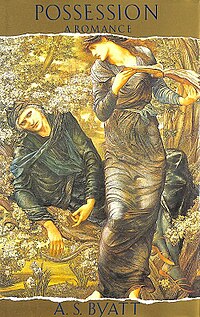
Possession: A Romance is a 1990 bestselling novel by British writer A. S. Byatt. It is a winner of the prestigious Man Booker Prize.

Part historical as well as contemporary fiction, the title Possession refers both to issues of ownership and independence between lovers, and to the possession that a biographer feels of their subject. The novel incorporates many different styles and devices: diaries, letters and poetry, in addition to third-person narration. Possession is as concerned with the present day as it is with the Victorian era, pointing out the differences between the two time periods satirizing such things as modern academia and mating rituals.

The novel concerns the relationship between two fictional Victorian poets, Randolph Henry Ash and Christabel LaMotte, as revealed to present day academics Roland Michell and Maud Bailey. Following a trail of clues from various letters and journals, they attempt to uncover the truth about Ash and LaMotte's past before it is discovered by rival colleagues.

NYTimes says:
"Even A. S. Byatt's house is an advertisement for her intellectual passions. Besides the predictably weighty presence of books, William Morris wallpaper and aforementioned reference to Elizabeth I, her yellow and blue dining room is an allusion to Monet's paintings of Giverny, and her dog William is named after Wordsworth."

New blog

Ilker has a new blog (http://objetpetita.blogspot.com), with his photos from Iran, Turkey, and India...

The pics are really cool. I sooo wanted to be in each of those places. I so wish I could take such photos...

Monday, August 06, 2007

Zehirli atıkları yakmak çözüm değil

Türkiye Stockholm Konvansiyonu'nu imzaladı ama yürürlüğe sokmadı. Oysa Avrupa'daki atık yakma tesisleri, bu sözleşmenin etkisiyle kapatılıyor

RADIKAL 06/08/2007

ÜMİT ŞAHİN

Her seferinde söylemekten dilimizde tüy bitti, yazmaktan yorulduk, ama ne yazık ki hâlâ atık yakmanın zehirli kimyasalların bertarafında uygun bir yol olduğu düşüncesi yaygınlığını koruyor. Oysa zehirli kimyasalların yakılması, bu maddelerin çevreye yayılmasını engellemez, sadece form ve hacim değiştirmesine neden olur. Zehirli atıkların yakıldığı tesislerin bacalarından çıkan son derece zehirli kimyasallar havaya ve bu yolla yine toprağa ve sulara yayılır, üstelik çok uzak mesafelere taşınarak bütün yeryüzünü kirletir.
Yakma ürünü olan en tehlikeli maddeler arasında dioksinler ve furanlar gibi birinci derecede kanser yapıcı zehirler de vardır. Kalıcı organik kirleticiler denen bu maddeler canlıların vücudunda birikerek besinler yoluyla, özellikle de hayvansal ürünlerin tüketilmesiyle insanlara da bulaşırlar. Kanser hastalığının bu kadar yaygınlaşmasında diğer kimyasal zehirler ve radyoaktif kirliliğin yanı sıra, başta dioksin olmak üzere kalıcı organik kirleticilerin yeryüzünü kirletmesinin de büyük rolü var. Üstelik bu maddeler pek çok canlı türünün soyunun tükenmesine neden oluyor.
İzinsiz gömülen zehirli atık varillerinin kamuoyunun gündemine gelmesine neden olan geçen yılki Tuzla olayı gibi, şu anda takibi süren Çerkezköy olayı da, zehirli atıkların kontrolsüz şekilde çevreye bırakıldığının kanıtları olarak basında önemli yer buluyor. Bir bütün olarak olayın yansıtılış biçimi ve üzerine gitme kararlılığı sevinç verici. Ancak her seferinde meselenin nasıl olup da İZAYDAŞ'ın yetersizliğine bağlandığını, bu yolla da neden yeni atık yakma tesislerinin gerekliliğinin savunulduğunu anlamak zor.
Hem yetkililerin, hem de konuyla ilgilenen pek çok insanın, zehirli atık sorununa "gözümüz görmesin, başımıza iş açmasın, yakalım kurtulalım" diye baktığını, atık yakmanın bu kadar savunulmasının bunun dışında bir nedeni olmadığını düşünüyorum. Öte yandan elbette atık yakma endüstrisinin yönlendirmelerinin de bu düşüncenin yaratılmasında rolü var ve
çevre kirliliğinden kaygı duyan çoğunluk, iyi niyetle de olsa çok yanlış bir önlemin savunuculuğunu yapma durumunda kalıyor.
Oysa zehirli atıkların gerçekten doğaya ve insan sağlığına zarar vermemesini sağlamanın yolları var. Öncelikle temiz üretim teknikleri denen sıfır atık teknolojilerini kullanmak, hatta bu teknolojilerin kullanılamadığı yerlerde ileri derecede zehir açığa çıkaran üretim süreçlerini (eğer yaşamsal öneme sahip değilse) yasaklamak gerekiyor. Böylece üretilen zehirli atık miktarı azaltılırken, bu aşamaya gelene kadar, ya da her şeye rağmen, üretilen atıkları ise yakmak değil, uygun zararsızlaştırma tekniklerini kullanan işlemlerden geçirdikten sonra (ki dünyada çok sayıda yöntem var) doğaya karışmayacak kadar sızdırmaz biçimde depolamak gerekiyor.
Türkiye kalıcı organik kirleticilerin üretimini yasaklayan Stockholm Konvansiyonu'nu imzaladığı halde Meclis'te kabul ederek onaylamadı ve yürürlüğe sokmadı (tıpkı Kyoto Protokolü gibi ABD ile birlikte). Oysa atık yakma tesisleri, Avrupa'da bu uluslararası sözleşmenin ve çevre hareketlerinin inatçı mücadelesinin etkisiyle kapatılmaya başlanmış durumda. Biz ise ne yazık ki hala kırk katır mı, kırk satır mı teknolojilerinden medet umuyoruz.

Dr. Ümit Şahin: Halk sağlığı uzmanı, Çevre İçin Hekimler Derneği II. Başkanı, Yeşiller üyesi

Friday, August 03, 2007

Court drops case against Pamuk

The case against Turkish novelist Orhan Pamuk has been dropped. The writer was facing charges under Article 301 of the Turkish penal code after commenting on the deaths of Kurds and Armenians in the Swiss newspaper Tages Anzeiger. After the court declared itself legally incompetent to intervene in December, the decision was appealed to a higher court which refused to change the decision.

Pamuk davası ortadan kalktı

RADİKAL - ANKARA - Yargıtay, Nobel ödüllü yazar Orhan Pamuk'un 'Türklüğü aşağılama' suçundan yargılandığı davanın, soruşturma ve kovuşturma izni verilmediğinden düşürülmesine ilişkin kararı onadı. Pamuk hakkında, İsviçre'de yayımlanan bir dergiye verdiği röportaj nedeniyle eski Türk Ceza Kanunu'nun 'Türklüğü aşağılamak' suçunu düzenleyen 159. maddesi uyarınca dava açılmıştı. Şişli 2. Asliye Ceza Mahkemesi, söz konusu maddeden yargılama yapılabilmesinin Adalet Bakanı'nın iznine bağlı olduğuna karar vermişti. Aralarında avukat Kemal Kerinçsiz'in de bulunduğu müdahiller, kararın bozulmasını istemişlerdi. Yargıtay 9. Ceza Dairesi, bozma talebini geri çevirdi.

Wednesday, August 01, 2007

Neler oldu, neler olacak?

Bu iş burada bitmez. Bitirmek için fazla güzel. Aşağıdan gelen talep o kadar fazla ve kaliteli ki, bitiremeyiz. Ayrı bir daldan devam ediyoruz. İnsanlara politikanın seçimden seçime değil, gündelik hayatta yapıldığını şimdi göstereceğiz

29/07/2007 Radikal

BASKIN ORAN

İki şey anlatacağım. Birincisi: Bu kadar başarılı bir kampanya yürütülmüşken, bu kadar büyük bir teveccüh gelmişken neden bu seçim yenilgisi? Bunun en açık yanıtı Prof. Nilüfer Göle'den geldi: "B. Oran, yandaşlarının ezberini bozamadığı için kaybetti".
Nitekim bendeniz 31.133 oy aldım (yüzde 1.89). Aynı bölgeden DTP tarafından çıkartılan Doğan Erbaş da 45.775 (yüzde 2.78). Yani, toplam 76.908 (yüzde 4.67). Oy bölününce ikimiz de seçilemedik, oysa bölgeden son milletvekili 59.635'le seçildi. DTP tarafından karşısına aday çıkartılmayan Ufuk Uras 1. bölgede yüzde 3.7'yle seçildi. Öğretici olabilir.
Bittabi, kampanya sırasında hatalar yapmış olabiliriz ve yaptık da. Bağımsızların kösteklenmesi için devlet her şeyi yaptı, ayrıca. Ama temel olay: 84 yıllık ezberleri, 1 ay 21 günde bozamadık.

Neden karşına aday?
"Neden DTP sonradan bir aday çıkardı?" sorusu sürekli geliyor. Verdiğim cevabı size de sunayım: "Ben DTP'nin yerine cevap veremem. Üstelik, sevdiğim bu insanların üzüntülerini daha da artıramam. Dahası, Kürtlerin TBMM'ye girmelerini TC'nin bekası açısından yaşamsal önemde buluyorum ve gerek DTP'nin gerekse Kürt kardeşlerimin oluşan bu duruma hiç layık olmadıkları düşünüyorum".
'Aday çıkardık, çünkü' diyebileceklere aktarasınız diye size bir de kronoloji verebilirim:
- 25 Mayıs Cuma Orhan Doğan ve iki eşbaşkan Ankara'daki evime konuk oldular ve beni destekleyeceklerini söylediler.
- 01 Haziran Cuma İstanbul 2. bölgeden adaylığımızı açıkladık. Aynı gün Fırat Haber Ajansı DTP'nin desteğini duyurdu.
- 02 Haziran Cumartesi 11.00'de DTP Ankara'da Bin Umut adaylarını ve beni desteklediğini açıkladı.
- 04 Haziran Pazartesi DTP İstanbul İl Başkanı Doğan Erbaş aynı bölgeden aday oldu.
Mutluyum. Çünkü DTP üst yönetimi aynı gün telefon etti, üzüntü belirtti ve konuyla bizzat ilgileneceğini söyledi. Arkasından, sayılamayacak kadar çok Kürt genci özellikle e-postalarla özür diledi. Bunun adı, iyi niyet'tir. Partinin yeni bir gençlik hastalığı yaşadığı ortada fakat Kürt insanının biraz da feodal kökenden gelen özelliği de ortada: Ağızdan çıkan sözü kutsal sayma duygusu ve ayrıca bir "Beyaz Türk" olarak şahsıma ve hareketimize gösterdiği muazzam teveccüh. Umarım, Kürt kardeşlerimin etnomilliyetçiliği aşma yolunda harcadığı bu çabaların taçlanmasına küçük bir vesile olurum ve çok onurlanırım.

Bundan sonrası
İkinci söyleyeceğim şey: Bu iş burada bitmez. Bitirmek için fazla güzel. Aşağıdan gelen talep o kadar fazla ve kaliteli ki, bitiremeyiz. Ayrı bir daldan devam ediyoruz. Anlatayım. Partilerin yıllardır yaptığı şeyi biz sıfırdan başlayarak ve yalnızca bir ay yapabildik. İnsanlara politikanın seçimden seçime değil, gündelik hayatta yapıldığını şimdi göstereceğiz. Ağustos sonuna doğru 2. bölge ilçelerindeki "kanaat önderleri" kendi mahallelerinde değerlendirme toplantıları yapacak. Eylül ortasındaki genel toplantıda bu "kılcal damar"larımızdan gelecek bilgi, şikayet ve hepsinden önemlisi önerileri derleyeceğiz.
"Şahdamarı"mız yani kuracağımız "komisyon"lar buradan beslenecek. Her konuda yasa tasarısı hazırlayacak: Nefret söylemi, sendikalar, çevre, TCK, ayrımcılığı önleme, siyasi partiler, YÖK, ve bittabi, Anayasa! Yanımızda, dört-beş orta boy devlete yetecek kadar uzman ve hoca var. Milletvekilliğine soyunmakla uğraşamayacak ama milletvekili oldukları takdirde olay yaratacak bu insanlar, aynen birer TBMM Komisyonu gibi çalışıp yasa tasarısı üretecekler. Sonunda bu tasarılar "Genel Kurul'a inecek". Orada dinleyen kılcal damarlarımızın huzurunda "kabul" edilerek Resmî Site'de (www.baskinoran.net) yayınlanacak. Ayrıca, TBMM'deki kafadaşlarımıza gönderilecek. Bu simülasyonlar, milliyetçi kavgalarla tıkanmış ve parti firavunları tarafından sindirilmiş bir TBMM'ye yasama faaliyeti nasıl yapılırmış, öğretecek.

"Aynı ırmağa iki kere girilemez"
Bu, Diyalektik'in Babası, Efes doğumlu toprakdaşımız Herakleitos'un sözüdür. Çünkü koşullar her şey için her an değişir. Ne geçen artık aynı sudur ne de giren aynı insan. Hiç sahte tevazuu gerek yok; zaten tevazu kibirden gelirmiş: Bizim bağımsız sol hareketimiz Türkiye'ye öyle yeni şeyler getirdi ki Türkiye'nin artık buradan geri dönmesi imkansızdır; buradan devam eder ancak:
1) Yeni söylem ve yeni ilkeler: Sürekli malum masalları dinleyen insanlar 'Bunları çok duyduk. Artık ezberini boz' diyecek. Bir Kürt hak edip etmediğine bakmaksızın bir Kürt'ü, bir Alevi hak edip etmediğine bakmaksızın bir Alevi'yi, bir kadın hak edip etmediğine bakmaksızın bir kadın'ı seçmekten bahsettiği zaman artık uyaracak: "Ezberini boz! Başka türden daha değerli birileri var".
2) Yeni örgütlenme biçimi: Sivil toplum artık karar vermeye yönelik çalışacak. Gerçek bir 'aşağıdan yukarıya' hareket yaratıyoruz. Kılcal damarlar şahdamarını besleyecek, şahdamarı Türkiye'yi. Bütün bunlar minimum bir hiyerarşiyle olacak. Örgütlenme tamamen gönüllü çalışacak. Merak etmeyiniz; bu hareket sıfırdan başlayarak bu muazzam kampanyayı aynen böyle götürdü ve böyle götürmeye fena halde teşne. Başarımız, yeni katılımları aynen bir ışığın kelebekleri çektiği gibi çekecektir. Tek farkımız, onları yakmak yerine yeniden üretmek olacak.
3) Yeni sol anlayışı: Hepsinden önemlisi işte bu üçüncüsü. 60'larda Marksizm bize "ezilen ve dışlanan"ların "emekçiler" olduğunu öğretti. Yıllar sonra ve epey zorlanarak (çünkü sol'da Kemalist çekirdek çok belirgindi) buna ikinci bir kategoriyi ekledik: Kürtler.
Ondan sonra, ondan sonrası tufan. 71 ve 80 askerî darbeleri bizi ezdi geçti. Türkiye'nin sol kolunu kopardı attı. Canımızı zor kurtardık; yani kurtarabilenler. O hengame içinde, 80'lerle birlikte seslerini duyurmaya başlayan yeni toplumsal güçleri, bu yeni ezilmişlik-dışlanmışlık kategorilerini fark bile edemedik: Aleviler, engelliler, kadınlar, çevreciler, gayrimüslimler, Romanlar, sokakta kırmızı ışıkta kağıt mendil satan sekiz yaşındaki çocuklar, Çerkesler, eşcinseller, Lazlar, üniversiteye başörtülü alınmayan kızlar, vicdani retçiler, daha sayayım mı?
İşte bağımsız sol hareket çağdaş solun, emekçilerin ve Kürtlerin yanı sıra bütün bunların kucaklanması gerektiğini öğretti Türkiye'ye. Bunların her birine de, yukarıda da söyledim, sadece kendini savunmamasını. Her ezilmiş-dışlanmışlık kategorisinin diğer bütün ezilmiş-dışlanmışları savunmasını.
Kolay değildir efendim. Bırakınız "ortak oy pusulası"nda adlarımızın karınca duası gibi yazılmış olması rezaletini. 2004 ortasından itibaren bir ejderha gibi başını kaldıran ve bu arada yalnızca sahte sol'u değil, klasik sol'u etkisi altına alarak Batı/yabancı düşmanlığına dönüşen milliyetçiliği biz hem Nişantaşı hem Okmeydanı sokaklarında,
"Milliyetçiler en çok millete zarar verir. Çünkü karşı milliyetçiliği tetikler" diye bangır bangır teşhir ettik. Vatanî hizmettir. Artık burada duramayız; vatana ihanettir.

Tuesday, July 31, 2007

Rahmi Koc'un komplo teorisine yanit

Koç'un Aradığı "Gizli El"i Açıklıyoruz

Rahmi Koç, "çok gerekli olmasına rağmen" son 20 yıldır Türkiye'de nükleer santral yapılmasını bir "gizli el"in önlediğini söyledi. Türkiye'nin "en büyük" sermaye grubunun "şeref başkanı" Koç'un sözünü ettiği gizli elin kimin eli olduğunu açıklıyoruz.


BİA Haber Merkezi
31/07/2007 Erhan ÜSTÜNDAĞ

BİA (İstanbul) - "Rahmi Koç'un bahsettiği aslında kapitalizmin kurucu ideologu Adam Smith'in eli. Çünkü nükleer enerji çok pahalı ve son 20 yılda sadece Türkiye'de değil dünyanın hiçbir yerinde yeni nükleer santral inşa edilmiyor."

Greenpeace Türkiye'den İklim ve Enerji Kampanyası sorumlusu Hilal Atıcı, "Koç Holding Şeref Başkanı"nın bahsettiği, "çok gerekli" nükleer santral ihalelerini engelleyen "gizli el"in kimin eli olduğunu bianet'e böyle açıkladı.

Smith, 1776'da yayınladığı Ulusların Zenginliği'nde "herkesin bencil olduğu bir toplumda uyumun, bilinçli bir müdahale olmasa da kendiliğinden oluşacağını; bu kendiliğindenliği sağlayanın piyasa ilişkilerinin gizli eli olduğunu" söylüyordu.

Görünen eller

Bunun dışında Türkiye'de beraberinde getireceği ekolojik ve insani yıkım riski nedeniyle nükleer santrale karşı mücadele eden binlerce insan ve onlarca kurum, grup var.

Gerçi onlar pek gizli değiller, elleri ortada. Rahmi Koç'a hatırlatmak için kısaca sıralıyoruz:

* Mesela Türkiye Yeşiller'i. Grup, son olarak 2002'de yayınladığı manifestoda "Dünyada gelişmiş ülkelerin terk ettikleri nükleer santraller ve nükleer atık alanlarının ülkemize girişinin önlenmesi için etkili eylemler yapılacaktır" diyor.

* Ya da Greenpeace Türkiye. Örgüt, nükleer enerjiye karşı hem ülke çapında hem de bölgesel çapta kampanyalar yürütüyor.

* Bir diğer örnek de, Sinop'ta nükleer santral planlarına karşı 24 bine yakın imzanın toplandığı sinopbizim kampanyası.

AKP: İlle bizim de olsun

Nükleer santral planları Adalet ve Kalkınma Partisi (AKP) döneminde tekrar ve ciddi biçimde gündeme geldi.

Buna karşı 30'dan fazla meslek odası, sendikalar, çevre dernekleri, çevre platformları, sol-sosyalist partiler ve bireyler Nükleer Karşıtı Platform'u oluşturarak birlikte hareket etmeye başladı.

Enerji Bakanı Hilmi Güler, 21 Mart'ta bir röportajda "Bizim de bir nükleer santralımız olması yönünde bu sefer çok kararlıyız" dedi. Koç'un açıklamalarından büyük sermayenin de en az bakan kadar hevesli olduğu açıkça görülüyor.

Ama ne yaparsınız, görünen ve görünmeyen eller buna izin vermiyor!

Fine for insulting the queen

(just check out the lawyer's take on it! Why is every bloody thing an immigration issue in this little country... hmpf...)
30 July 2007 Expatica.com
AMSTERDAM – A magistrate in Amsterdam sentenced 47-year-old Regilio A. on Monday to a fine of EUR 400 for seriously insulting Queen Beatrix and a police officer. It is the first time in years that someone has been taken to court and penalised for insulting the monarch.
The man will also have to serve a seven-day prison sentence he was provisionally imposed earlier. The justice department wanted him to be sentenced to an additional two weeks in prison for his insulting comments. The maximum sentence for lèse majesté is five years in prison.
A. got into an argument with police officers on bicycle in Amsterdam on 7 June. He performed a Nazi salute, called a police officer a "rotten bastard," and called out "I hate your queen. The queen of the Netherlands is a whore."
He then spoke insultingly of the monarch using sexually explicit language and racist comments.
The man's lawyer says that A., originally from Surinam, was confused and under the influence of alcohol and drugs, and that he did not insult the queen personally but as representative of the Dutch people.
"His feelings of revenge and hate towards white people put him under such pressure that he could not help but utter those words."
The court felt that authority figures should be somewhat thick-skinned in cases like this. "The queen as well." But the sexual insinuations make it clear that the man was not uttering commentary of a socially critical nature, the court found.
There have been few cases of penalties for insulting the monarch. There have been a few verdicts pronounced over the last years convicting individuals for insulting the crown prince, however.
In 2003 two people were fined EUR 250 each for jeering at Crown Prince Willem-Alexander on the day of his wedding to Máxima the year previous. One had called the prince "dumb," the other had thrown a bag of paint at the royal carriage.

Monday, July 30, 2007

LDP loses in upper house elections

After writing a long and enjoyable piece on Japanese politics and having lost it due to the obscurities in Iexplorer, I am simply citing the newspaper articles that talk about the upper house elections in Japan. The governing LDP-led coalition lost the majority of the House of Councillors for the first time in more than 50 years.

BBC Report (En)
Radikal News Article (Tr)
OPINIONS (well done Harro, the buzzword was Global Warming for the young generation)

Thursday, July 26, 2007

V8.P4. Faversham


It was great to meet Paul (again), and his son Tau (for the first time) and to stay at their boathouse in Faversham.

It was the most quiet town I've ever seen in England and it had the most beautiful church tower (Although the abbey was dissolved by Henry VIII the nearby St Mary of Charity, Faversham Parish Church remains. It has an unusual 18th century flying spire, known as a crown or corona spire, which is visible for long distances), the oldest brewery in England, and a history of wars and destruction.

Wiki says:
The town of Faversham is known in Kent as a harbour and market community but is also at the centre of the county's brewing industry — home to Shepherd Neame, a brewery, acquired from the last heir of the Shepherd family by Percy Beale Neame in the 1840s. Abbey Street and the centre of the town include a remarkable collection of original medieval houses. Much of it was intended for demolition as recently as the 1960s, until the value of the buildings, now listed, was recognised and local people began a determined fight to restore and preserve the area.

V8.P3. more of London

The last few days, I was busy seeing friends and exhibitions:

1. Dali Universe
@ County Hall Gallery
This was a great exhibition of his sculptures. Here's a little glossary...

Melting clocks
The famous melting clocks represent the omnipresence of time, and identify its mastery over human beings. The inspiration for this concept came from a dream of runny Camembert one hot august afternoon. These symbols represent a
metaphysical image of time devouring itself and everything else.

Crutches
The crutch is one of Dali’s most important images and features in many of his works. It is first and foremost a symbol of reality and an anchor in the ground of the real world, providing spiritual and physical support for inadequacy in life. The crutch is also the symbol of tradition, upholding
essential human values.

Drawers
The drawers arise from their Freudian explanation as a representation of the concealed sexuality of women. Dali portrays many of the drawers to be slightly ajar, indicating that their secrets are known
and no longer to be feared.

Elephants
Dali’s elephants are usually depicted with long, multi-jointed, almost invisible legs of desire, and carrying objects on their backs, which are also full of symbolism. These elephants represent the future and are also a symbol of strength. They are often shown carrying obelisks, which are symbols of power and domination, and not without phallic overtones. The weight supported by the animals spindly legs shows weightlessness, only made more significant by the burden on their backs.

Snails
The snail occupies an important place in the Dalinian universe as it is intimately linked to a significant event in Dali’s life – his meeting with Sigmund Freud. As Dali believed that nothing occurred to him simply by accident, he was captivated when he saw a snail on a bicycle outside Freud’s house. He connected the snail with a human head, more particularly Freud’s head. As with the egg and lobster, the hard shells and soft interiors of snails also fascinated Dali, and their geometry of their curves enchanted him.

Eggs
The egg is another favourite Dalinian motif, given the duality of its hard exterior and soft interior. Dali links the egg to pre-natal images and the intra-uterine universe, and thus it is a symbol of both hope and love.

Ants
When Dali was five years old, he saw an insect that had been eaten by ants and of which nothing remained except the shell. The swarming ants in Dali’s pictures and sculptures are references to death and decay, and are reminders of human mortality and impermanence. They are also said to represent overwhelming sexual desire.

Grasshoppers
Dali had an irrational fear of grasshoppers, stemming from his childhood torment by other children, who often threw grasshoppers and other insects at him. When they appear in Dali’s work, grasshoppers are used as a symbol of destruction, waste and fear. Dali represents them with a fearful nature, as large and intimidating in comparison to the other figures, and they are often shown in the act of eating the main subject of the work.


and some quotes:

The important thing is to provocate hallucinations and dreams without drugs, and that's what I do. My paintings are hallucinations.

The human body is full of secret drawers which only psychoanalysis is capable of discovering.

Don't be afraid of perfection. You will never reach it!

There is almost always something holy about mistakes. Never try to correct them.

What we see isn't in things, but in our souls.

Now I am going to fill it with drawers because the only difference between the immortal Greece and the world today is Sigmund Freud.

Gala transforms my madness into a rational organization of a critical type.


2. Dutch Portraits @ National Gallery

Following its independence from Spain in the 17th century, the Dutch Republic experienced an era of unprecedented wealth, the so-called 'Golden Age.'

Thanks to the successful activities of its merchants and entrepreneurs - and in sharp distinction to the rest of Europe - a new middle-class elite emerged. Its members became the dominant force in local government and civic institutions, and as a result became the new principal patrons of the arts. Portraits were especially suitable to express their newly found self-confidence and desire for representation, and artists responded by developing new types of portraits to meet the demands of this clientele.

This exhibition includes some 60 works, all painted between 1600 and 1680. Exhibits range from small, individual portraits meant for the private home to the large-scale group portraits of members of charitable institutions and civic guards.

The one on the left is a 1599 painting by Jan van Ravesteyn: 'Portrait of Hugo Grotius'. By the time this portrait is made, Hugo is only 16 and yet is thoroughly involved in politics. He is known to be the father of international law (at least in the Netherlands)...

Sunday, July 22, 2007

Initial election results...

AKP gets the 68% of the parliament with only 47% of the votes, and guess what: it is the opposition parties who support this ridiculous 10% election treshold!

It's good to hear that Ufuk Uras
(Ist) is (most probably) elected but Baskin Oran (Ist), Ali Özdemir (K.Maras), and the Green candidates Bilge Contepe (Izmir) and Neriman Gül Eren (Bursa) couldn't make it.

Democracy! (but of what kind?)

Theorists of democracy often rely on Habermas’ work on the public sphere and communicative action. The most straightforward critique of deliberative models of democracy has been provided by the ‘agonistic’ understanding of democracy, as employed in the work of Claude Lefort, and Ernesto Laclau and Chantal Mouffe.

Deliberative Democracy or Agonistic Pluralism
by Mouffe

Also:

Tuesday, July 17, 2007

V8.P2. plans for the weekend...

TimeOut London suggests:
Dalí & Film (Tate Modern)
"Elsewhere, ‘Dalí and Film’ deploys paintings, short films, scribbled scenarios and photographs to make every possible connection between the artist and the cinema. When not cross-referencing the iconographies of his paintings and his films, the wall texts link his canvases’ vertiginous angles to Harold Lloyd’s slapstick, and his dramatic lighting to German Expressionism. The latter feels dubious, since Dalí was clearly hugely influenced by the hard light and shadows of Spain; and also because we’re not given sufficient info on, or any examples of, what Dalí watched."

Dutch Portraits (National Gallery)
"In some ways the National Gallery's 'Dutch Portraits' reflects our own preoccupation with status, not least when it comes to our scant appreciation of traditional portraiture, bygone fashions and knowledge of world history. I suppose they want us to look beyond our own shortcomings and presumably, past all those furrowed brows and beards, too."

State Britain (Tate Britain)
"recreation of the banners and placards of Parliament Square anti-war protester Brian Haw in the Duveen Galleries."

Monday, July 16, 2007

V8.P1. Back to UK

I posted the last few posts from Amsterdam, of course. I spent a whole two weeks there. It was mostly frustrating so I decided not to post anything about my work or life at that moment. but now, I'm back in good old Essex.

There really is nothing much to tell... I'm enjoying this process of being mesmerised by theory and philosophy (and I think I kind of got used to the Essex campus). Moreover it's great being a student again :)
At a parallel but separate level, the psychoanalysis continues...

To make it simple, I will put the link to my reading list here. You'll agree that I now have to go and read near the lake if the ducks let me be...

Thursday, July 12, 2007

V7.P3. Cambridge


Cambridge was huge and historical. All I could see was the University of Cambridge. If there is more to the town, I am not aware of it (and didn't have the time to explore much).

Sunday, July 08, 2007

V7.P2. South of Wales

It was a combination of first times: I have seen Alptekin for the first time in years, for the first time I had a long drive in the English countrysides, I've seen my first -proper- British gardens, and I've been to the Wales for the first time period.
I will do this tour with the help of photos, as Basak suggested (and because the photos are nice).
It was about books and it was about gardens.
First, the books: Hay-on-Wye (wikisays:)
often described as "the town of books", Hay-on-Wye is a small market town in Powys, Wales. It is on the River Wye, which is the natural and administrative border with England.

Hay-on-Wye is the UK's mecca for bibliophiles, boasting "thirty major bookshops"

trivia: On 1 April 1977, bibliophile Richard George William Pitt Booth declared Hay-on-Wye to be an independent kingdom with himself as its monarch. He sought publicity by declaring Hay an "independent kingdom" with himself as its king. The tongue-in-cheek micronation of Hay-on-Wye has subsequently developed a healthy tourism industry based on literary interests for which some credit Booth[2]. He recently announced plans to sell his bookshop and move to Germany; on this occasion Local MP Roger Williams was quoted as saying "His legacy will be that Hay changed from a small market town into a Mecca for second-hand book lovers and this transformed the local economy")


and then the gardens: