Monday, February 02, 2009

dogru yonde kucuk adimlar...

Ermeni aydınlar da harekete geçiyor

Radikal 01/02/2009, ADNAN GÜNDOĞAN/ERTUĞRUL MAVİOĞLU

Büyük tartışmalara neden olan ‘Ermeniler’den özür diliyorum’ kampanyası, Ermeni aydınlara da ilham verdi. Şimdi Ermeni aydınlar, 1900’lü yılların başında Ermeni çetelerin öldürdüğü masumlar ve ASALA eylemleri için Türklerden özür dileyecek

“Ermeni halkı adına işlenen cinayetler için özür diliyor, bunların acısını duyan masum Osmanlıların ve Türklerin duygularını paylaşıyorum.”
Bu cümlenin, Avustralya’nın Sydney kentindeki Macquarie Üniversitesi Öğretim Üyesi ve Türk Ermeni Diyalog Grubu Eşbaşkanı Dr. Armen Gakavian tarafından ‘özür diliyorum’ kampanyası çerçevesinde imzaya açılacak olan bildirinin taslağında yer aldığını, Radikal 2’de Baskın Oran’ın yazısından öğreniyoruz.
ABD’den Prof. Dennis Papazian’ın da desteklediği taslak bildiriye önümüzdeki hafta son hali verilecek ve dünyadaki bütün Ermenilere imzalamaları için ulaştırılacak. Kampanyanın önemli isimlerinden Papazian, Michigan’daki Ermeni Araştırmaları Merkezi’nde Tarih doktorası sahibi bir araştırmacı olarak tanınıyor. Papazian, Ermeniler konusundaki düşünce ve yazılarıyla bilinen Taner Akçam ile aynı üniversite bünyesinde çalışmalar yapıyor.
Ermeni aydınlara bu adımı attıran olayın, Türkiye’de başlatılan ve başlar başlamaz da ırkçı-faşist çevrelerin yoğun saldırısına uğrayan ‘özür diliyorum’ kampanyası olduğunu, Dr. Armen Gakavian reddetmedi. Gakavian, kampanyanın sürdürüldüğü www.ozurdiliyorum.com sitesi hack saldırısına uğramış olsa da 30 bin imzaya ulaşılmış olunmasından mutlu. Ermeni aydınların kampanyası, “1915’te Osmanlı Ermenileri’nin maruz kaldığı Büyük Felâket’e duyarsız kalınmasını, bunun inkâr edilmesini vicdanım kabul etmiyor. Bu adaletsizliği reddediyor, kendi payıma Ermeni kardeşlerimin duygu ve acılarını paylaşıyor, onlardan özür diliyorum” diyen Türkiye’deki bildiriden esinlenmiş. Şimdi benzer cümleler Ermeni aydınlar tarafından dile getirilecek ve yeni bir vicdan muhasebesinin de önü açılacak. Ve belki de iki özürden dünyayı kıskandıracak sıkı bir kardeşlik doğacak.
Radikal’in sorularını yanıtlayan Gakavian, “Yürüteceğimiz kampanya ile Türkiye’deki aydınların ‘özür dileme’ kampanyasını tüm yüreğimizle karşıladığımızı göstereceğiz. Hazırlanan bildiri, Ermeni çetecilerin işlediği cinayetler ve ASALA eylemlerinden ötürü Türklerden özür dilemeye yöneliktir. Geçmişte yaşanmış ve gelecekte meydana gelebilecek her türlü şiddeti reddediyoruz. Umarım kampanya başarılı olur.” dedi. İşte Gakavian’ın sorularımıza yanıtları:

Türkiye’de 30 bin kişinin katılımını sağlayan bir kampanya yürütülüyor. 1915 Ermeni soykırımını hayata geçirmiş Osmanlı Türkleri yüzünden acı çeken ve adaletsizliğe uğrayan Ermenilerden özür diliyorlar. Bundan haberdar mısınız?
Evet, Sydney’deki bazı Türk dostlarımdan olayı işittim. Bence Türk ulusunun asaletini güçlendirecek türden harika bir girişim. Bu türden bir özür asaleti gösteriyor zira bir kişinin, sıradan bir insan da olsa bir ulus da olsa geçmişiyle yüzleşmesi çok güç; ve bu cesareti gösteriyor zira çok kısa zaman önce yüzleşme çabalarının susturulma girişimi olarak TCK 301. maddeyi tanıdık. Umarım Ermeniler dahil dünyanın diğer ulusları da bu özür kampanyasına imzalarıyla katılarak öncülük edenlerin gösterdiği cüretin aynını sergileyerek kendi dolaplarındaki iskeletlerle yüzleşebilirler.

Ermeni aydınların başlatacağı kampanyanın içeriğini anlatabilir misiniz? Ne yazacak hazırlanan bildiride?
Türkiye’deki ‘özür dilerim’ kampanyasına yanıt niteliğinde bir çalışma bu. Geçmişte yaşanmış ve gelecekte yaşanacak olan her türlü şiddeti reddetmeliyiz. Türkiye’deki çalışmayı yürekten destekliyorum. Bu bize mutluluk verdi. Bir hafta sonra imzaya açacağımızın bildirimiz son şeklini almış olacak. Ermeni çetecilerin işlediği cinayetlerden ve ASALA eylemlerinden ötürü Türklerden ve Osmanlılardan özür dileyen, yaşananlardan duyulan üzüntüyü anlatan bir içeriği var bildirinin.

Siz Türk devletinin yerinde olsaydınız özür diler miydiniz?
Öyle olacağını umardım. Bu soru etrafında düşünelim: Bir Ermeni olarak Ermenilerin işlediği suçlardan ötürü üzgün müyüm? ASALA nedeniyle üzgün müyüm? Ermenilerin işlediği katliamlar ve etnik temizlikten ötürü? Evet, üzgünüm, hiç bir çekimcem yok. Bu suçlar bütün bir ulusun ortadan kaldırılması girişimiyle karşılaştırılamasa dahi hâlâ suçtur ve kimse aksine ispat edip bunları önemsizleştiremez. Eğer Türk devletinin yerinde olsaydım, özrü onyıllar süren inkârın ardından yitirilmiş itibarın yeniden kazanılmasının mükemmel bir yolu olarak görürdüm.

Türkiye’deki özür kampanyasında sizin bulgularınızın yeri var mı?
Hayır, doğrudan yok. Özür Ermenilerin çektikleri acıların tanınmasıdır ve bu acıya sebep olan Türk devletinin hem öldürmeler hem de inkârdaki sorumluluğunu üstlenmesidir. Amaç tanımlamalar sorusuna ve siyasi açıklamalara vs. yanıt vermek değildir. Bu yüzden özüre dair herhangi bir Ermeni tavrı da benzer olmalı. Gerçekte şahsen Türk aydınlarının açıklamalarına yanıt niteliğinde bir taslak hazırladım ve bunu çok yakında dağıtıp sonra da kamuoyuna sunacağım. Bu umut ederim ki Ermenilerin de imzalarını koyacakları bir dilekçeye dönüşür. Ayrıca Fransa’dan da bazı karşı yanıtlar var, bir grup Fransız-Ermeni aydının imzaladığı.

Türkiye’deki özür kampanyasının, Ermenilerin Ermeni toplumu içinde yaptıklarına etkisi ne olur?
Köklü düzeyde denilebilecek devasa bir etki olmaz ve şu türden konuşmalardan öteye geçmez: “Harika değil mi? Türkiye’de bazı şeyler açıkça değişiyor.”
Kimileri şüpheli duracak yahut yeterli bulmayacaktır. Fakat çoğunluğu müteşekkir olacak ve bundan etkilenecektir. Ermenilerin çoğunun bunun ne kadar cesurca bir adım olduğunun farkına varacağını sanmıyorum.

Peki bundan sonra ne olur? Kendi araştırmanız ve kampanyanıza dair nasıl bir sonuç görmek istersiniz?
Ermenileri kaçınılmaz bir devlet kabulünü memnuniyetle karşılamaya hazırlamak isterim. Bu altı ayda da olsa 60 yılda da fark etmez. Ve cesur Türklerin yaptıkları gibi Ermenilerin de kendi dolaplarının içindeki iskeletleri ortaya koymaya istekli olmalarını isterim.
Bu arada aynı zamanda Sydney’deki Ermenilerle Türkleri bir araya getirme çalışmama devam edeceğim, nereye gidersem gideyim yine aynı şeyi yapacağım. Burada, Sydney’de yaptığımız nefret ve yalanların üstesinden sevgi ve hakikatle gelebilecek dünya çapında gelişen bir hareketin parçası olmaktır. Bu tanrının verdiği görev ve aksi davranamam. Türk özründe kullanılan kelimelerdeki gibi, ‘vicdanım reddeder’... yerli yerimde durup hakikat ve uzlaşma yolundaki fırsatın kaçmasını...

Türk hükümetinin pozisyonu veyahut halet-i ruhiyesi özür dileyecek bir şey yapılmadığı yolunda. Bunu nasıl değerlendiriyorsunuz?
Tam aksine özür dilemesi icap eden devlet. Evet bireyler özür dileyebilir, bunun pek çok örneği var. Vicdanların sessiz kalmaya müsaade etmediğini yahut da bir biçimde bu suçlardan ötürü kârlı çıktıklarını anladıklarını görüyoruz.?Fakat bu devletin bir hakikati kabul edip özür dilemesinin yerini tutmaz.

Türklerin Ermenilerden özür dilemesi yeterli mi? Bu Ermeni toplumunu tatmin edecek mi?
Bu çok önemli ve zor bir soru. Bu konuda Ermeniler içinde elbette çok farklı görüşler var. Ben sadece benimkini dile getireyim. Daha önce de belirttiğim gibi bir özür sadece bir başlangıçtır, fakat iyi bir başlangıçtır. Eğer özür yitirilmiş insan yaşamı ve çekilmiş acıların tanınmasıysa, ki bugün tanıklık ettiğimiz özür tam da bu, bunun çok büyük bir önemi vardır.
Fakat özrün samimiyeti bunu izleyen adımların ne olacağına da bağlı, mümkün olduğu kadar işlenmiş olan suçun sonuçlarına da bağlı. Türk devleti örneğinde bu, kurbanların faillere dönüştürüldüğü inkâr ve tarihi çarpıtma politikasının bir kenara bırakılması anlamına geliyor. Aynı zamanda bu anıtların restorasyonu, geri dönme hakkı (ziyaret için yahut yaşamak için) yahut da Ermenistan’ın Türk toprakları aracılığıyla bir limana erişiminin sağlanması türünde olabilir.

Açıkça belirtmeliyim ki bence toprak talepleri, bazı toprakların Ermenistan’a verilmesi anlamında tamamen abestir. Bu aynı zamanda gerçekdışıdır da.
Tartışılabilecek başka bazı fikirler de olabilir. Fakat hiç tereddütsüz söylenebilecek tek bir şey varsa o da şudur: En büyük tazminat ve samimiyet ifadesi Türkiye’nin koşulsuz olarak Ermenistan’a uyguladığı ablukayı kaldırması ve Ermenistan’ın kendi ayakları üzerinde durabilmesi olacaktır.
Bu yüzden şahsen geleneksel anlayışta olduğu gibi toprak talepleriyle ilgilenmiyorum. Ermenilerin ceplerine para konulması anlamında mali tazminatla da ilgilenmiyorum. Devlet yukarıda saydığım tavsiyelerin uygulanmasına harcanmak üzere fon bulmakla yükümlü zaten ve ayrıca Türk hükümetinin Washington’daki lobicilere ödediği paraları kestiğinde hayli tasarruf edeceğini de unutmamalıyız.

Özür dilemenin etkisi ne olur?
‘Cinayetin inkârının son aşaması’ denilip duruldu. Özür Ermenilerin tarihlerinin korkunç bir parçasını kapatmasına yardımcı olabilir. Bir iyileşme sürecini başlatabilir. Kimi acıları dindirmeye yarayabilir. Fakat belirtmeliyim ki bu sadece bir ilk adım olmalı, son değil.

Özür kampanyasına öncülük anlamında aydınların rolü için ne düşünüyorsunuz? Mükemmel ve tarihsel anlamda kaçınılmaz. Memnuniyetle karşılıyorum. Bu hareket özür yolunda harekete geçilmesi için iyi bir başlangıç fırsatı oluyor. Dünya tarihi boyunca aydınlar en büyük değişim yapıcılar oldular. Gelecekte neler olacağını görmek için sabırsızlanıyorum.

Halihazırdaki Avustralya hükümeti Şubat 2008’de ülkedeki ‘kayıp kuşaklardan’ (Avustralya’nın yerli halkı Aborijinler) özür diledi fakat Avustralya’nın 1778’deki işgalinden ötürü yerli halka reva görülenlerde ötürü özür dilemediler. Bunu nasıl değerlendiriyorsunuz?
Bu özür Avustralya hükümetinin olgunluğunun ve asaletinin kanıtıydı. Özrün kendisi çok etkili ve samimiydi ve başbakan özür metnini kendisi yazmakta ısrarcı oldu, bu yüzden çok kalpten gelen bir şeydi. Fakat bunun arkasında neredeyse yarım yüzyıllık tartışmanın ardından bir inkâr ve öteleme var. Ve bu çok spesifik bir özürdü, sadece yerli Avustralyalılara yönelik özel bir muameleyi ele alıyordu. Neden? Belki de bu yaptığımız hataların çok somut delillerinin sadece bir kısmını içeriyor. Bilemiyorum.
Özür aynı zamanda ‘soykırım’ kelimesini içermedi, büyük olasılıkla bu türden bir kavramın bölücü olacağından ötürü. Belki de birkaç yıl içinde toz duman yatıştığında ve hâlâ önde gelen kişilikler nezdinde kayıp kuşakların soykırıma maruz kaldığı yolunda büyük bir fikir birliği hasıl olursa gelecekteki hükümet bu kavramı da kullanabilir.
Fakat daha da önemlisi yerli Avustralyalıların yaşadıkları felaketin ve derin acıların tanınmış olması ve kamuoyu nezdinde bunun ortaya koyulması. Hükümetin bu doğrultudaki sorumluluğunu herhangi bir gerekçeye başvurmadan yerine getirmesi.
Parlamentoda başbakanın dudaklarından ‘özür dilerim’ kelimesini işittiklerinde ağlayan yerli Avustralyalıları gördüğümde, bir anlığına Türk hükümetinin de böylesi bir özrü dile getirmesinin nasıl bir şey olacağını hayal etmeye çalıştım. Sanırım pek çok Ermeni gibi ben de rahatlamış hissederdim. Fakat bunun sadece bir başlangıç olduğunu, nihayet olmadığını, bir süreç olduğunu da görmemiz lazım.

Thursday, January 15, 2009

BP wins coveted 'Emerald Paintbrush' award

BP - energy mix or PR fix?

The tension built as the judges deliberated. Then at last the results were were all in and - ta-da! It was time to announce the winner of the first annual Greenpeace 'Emerald Paintbrush' award for greenwashing above and beyond the call of duty. Cue a quick roll on the drums, and step forward into the spotlight - BP!

The energy corporation with an income larger than most of the world's nation states has spent a lot of time and money restyling itself as being 'Beyond Petroleum' in recent years, but a trawl through their accounts quickly reveals just how empty that assertion really is - 'Back to Petroleum', more like it.
The 2008 Greenpeace 'Emerarld paintbrush award for greenwash goes to...BP!

Strangely enough, when our dinner-jacketed and bow-tied representatives turned up at the British oil giant's London headquarters this morning to present the handsome, bright green, mounted paintbrush to group CEO Tony Hayward, they were unceremoniously ejected.

The prize was offered in recognition of the company's attempts to greenwash its brand over the course of 2008, in particular its multimillion dollar advertising campaign announcing its commitment to alternative energy sources. Slogans such as "from the earth to the sun, and everything in between” and “the best way out of the energy fix is an energy mix".


The reality, you'll be unsurprised to learn, is somewhat different. We got our hands on internal company documents (summarised in the chart above) which clearly show that this year the company allocated 93 per cent ($20bn) of its total investment fund for the development and extraction of oil, gas and other fossil fuels. In contrast, solar power (a technology which analysts say is on the brink of important technological breakthroughs) was allocated just 1.39 per cent, and wind a paltry 2.79 per cent.

The same presentation reveals that BP intended to spend just $1.5bn this year on all forms of alternative energy – including wind power, wave, solar, tidal, and biofuels and even including some "efficient" natural gas projects. This amount represents just 6.8 per cent of their total investment.

The reality is that BP is one of the world's largest single corporate emitters. In 2007 alone the company released over 63 million tonnes of CO2 into the earth's atmosphere, roughly equivalent to the emissions of Portugal. But while their adverts announce the arrival of a fresh approach, BP boss Tony Hayward continues to describe alternative energy only as "a valuable option for the future". Too little, too late Tony.

A final word from our man at the impromptu awards ceremony, James Turner:

"You wouldn't know it from their adverts, but BP bosses are pumping billions into their oil and gas business and investing peanuts in renewables. They've won the 2008 Emerald Paintbrush award because their slogans suggest that they are serious about clean energy, while their actions show they're still hell-bent on oil extraction."

Video: highlights from the BP 'Emerald Paintbrush' awards ceremony

Thursday, January 08, 2009

qUote of the DAy


Every one knows that the learned societies of Europe are mere schools of falsehood, and there are assuredly more mistaken notions in the Academy of sciences than in a whole tribe of American Indians. (..) A savage will not turn his head to watch the working of the finest machinery or all the wonders of electricity. (..) Everything matters to us, as we are dependent on everything, and our curiosity naturally increases with our needs. This is why I attribute much curiosity to the man of science and none to the savage. The latter needs no help from anybody the former requires every one, and admirers most of all.

Jean Jacques Rousseau – Emile, Book III, 1762

Thursday, January 01, 2009

looking back on 2008...

There are several things I forgot to post about, which were important in 2008. They don't make a consistent whole. But, I have to add some not-so-up-to-date memories...

When my mother and her cousin, Serap visited me in Amsterdam we had such a busy schedule that I forgot to post about our museum night (spent in Alto Jazz Bar, as there were no tickets left to musea), our visit (with Witho) to Vollendam and Hoorn as well as Scheringa Museum for Realism, in which we found a toroop, a magritte and two de chirico's (yayy!) and discovered two belgian painters: gustave van de woestyne and valerius de saedeleer.

The nicest paintings I have seen in the museum are somehow not available over the net, so what you see here is an underestimation of a small but precious exhibit.

Why did we end up in some unheard of museum like that? Good question...

I guess we were lost. Or maybe, we ended up in Hoorn for lunch, and Scheringa museum (completely out of one's usual way) was just too close by to skip.

Hoorn was a predictable Dutch town, as you
can see in the two pictures I put here... Other than that it could be summarised as, nice fish, rather labour-leaning politics and a statue of some VOC colonizers in the middle of town square.

But before that we visited Vollendam, and THAT was a different story...

This little fishing village was designed so that it would represent everything that a tourist might imagine about the Netherlands in the most steriotypical sense of the word. I thought it was ludicrous, and my guests said this was exactly what they thought all of the Netherlands was like. A fishing village.... Thank Shiva, that's not the case...

Otherwise, I think they thought Amsterdam was just too much like Istanbul. Smaller, of course, and substract the chaos and the traffic you cannot escape in Istanbul.
It was just not too surprising.... Vollendam, on the other hand, was indeed different than Istanbul. :)

I don't find it pleasant though... Why?
Well... Let's start with the coat of arms...
a grizzly BEAR lifting a board with a black COW and three STARS on it. No fish, no funny hats, no sea at all on the coat of arms. AND YET IT IS FUNNY!
Second, it was too orderly even for the Netherlands' standards!
Third, nothing particularly unique whatsoever! Maybe the smell of the sea... Yeah, that was lovely...
I don't know... I'm just not visiting Vollendam again.

On the way back, we visited the
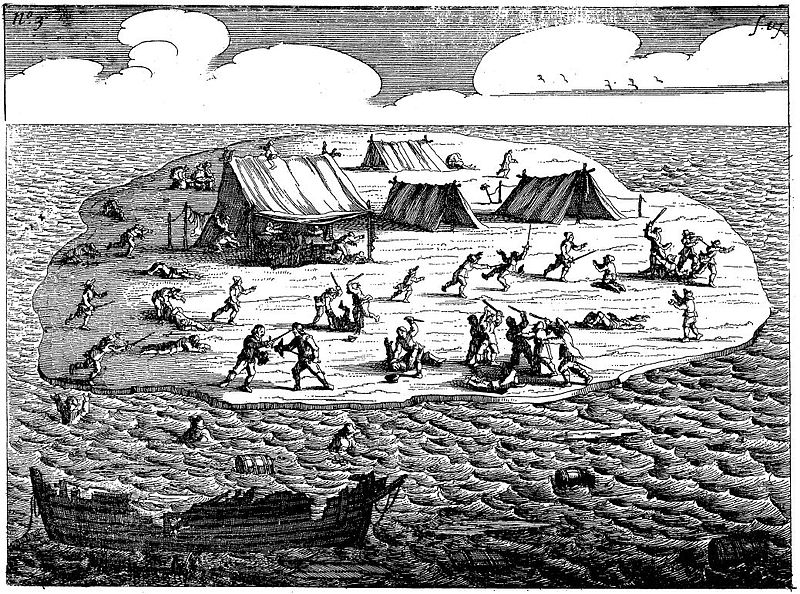
Batavia Ship (or rather the replica), which was a ship of the Dutch East India Company (VOC). She was built in Amsterdam in 1628, and had 24 cast-iron cannons. Batavia was shipwrecked on her maiden voyage, and made famous by the subsequent mutiny and massacre that took place among the survivors. This is an incredibly interesting story reminding the lord of the flies. Wiki has a good long plot line here. And here is an image plate from Ongeluckige voyagie van 't schip Batavia (The Unlucky Voyage of the Vessel Batavia) from 1647.
The twentieth century replica of the ship is also called the Batavia. The replica was built at the Bataviawerf (Batavia Wharf) in Lelystad, with traditional materials, such as oak and hemp, and using the tools and methods of the time of the original ship's construction. The project lasted from 1985 to 1995, and was conducted as an employment project for young people. For the design, good use was made of the remains of the original ship, as well as historical sources, such as 17th century building descriptions (actual building plans weren't made at the time), and prints and paintings by artists (who, at the time, generally painted fairly true to nature), of similar ships. A week before we were there, on October 13th, a fire ripped through the Batavia-werf destroying the sailmaking shed, several office buildings and the sails of replica ship Batavia, but the ship itself was not damaged.

Tuesday, December 30, 2008

Christmas presents (...continued)


The second precious present from the
feestdagen was actually a Christmas present from Carla: Haruki Murakami's 2002 novel, 海辺のカフカ or Umibe no Kafuka (Tranlated to English as: Kafka on the Shore, although a direct translation, 'Kafka's Coast', should be as appropriate).

Wiki notes that John Updike described this novel as a "real page-turner, as well as an insistently metaphysical mind-bender." I agree, I started it just because it was nearby when sitting in Carla's living room in Brabant, and since then I have been struggling to let myself concentrate on work. Hopeless... So I submit myself to this novel before I go back to work. I also find the book much less unsettling than Murakami's previous novel I read, 世界の終りとハードボイルド・ワンダーランド (Hard-Boiled Wonderland and the End of the World).

The plot (as Wiki supplied) is as follows, although it doesn't do justice to the style:

Comprising two distinct but interrelated plots, the narrative runs back and forth between the two, taking up each plotline in alternating chapters.

The odd chapters tell the 15 year old Kafka's story as he runs away from his father's house to escape an Oedipal curse and to embark upon a quest to find his mother and sister. After a series of adventures, he finds shelter in a quiet, private library in Takamatsu, run by the distant and aloof Miss Saeki and the androgynous Oshima. There he spends his days reading the unabridged Richard Francis Burton translation of A Thousand and One Nights and the collected works of Natsume Sōseki until the police begin inquiring after him in connection with a brutal murder.

The even chapters tell Nakata's story. Due to his uncanny abilities, he has found part-time work in his old age as a finder of lost cats. The case of one particular lost cat puts him on a path that ultimately takes him far away from his home, ending up on the road for the first time in his life. He befriends a truck-driver named Hoshino. Hoshino takes him on as a passenger in his truck and soon becomes very attached to the old man.

Nakata and Kafka are on a collision course throughout the novel, but their convergence takes place as much on a metaphysical plane as it does in reality and, in fact, that can be said of the novel itself. Due to the Oedipal theme running through much of the novel, Kafka on the Shore has been called a modern Greek tragedy.

The style is amazing (and amazingly Murakami, if I may say so after reading only two of his novels... Well... Wiki agrees that it is his typical blend):
Kafka on the Shore demonstrates Murakami's typical blend of popular culture, quotidian detail, magical realism, suspense, humor, an involved and at times confusing plot, and potent sexuality.
Murakami also has a magnificient website, which I suggest you visit after first getting to know his world/work a little. (If you already do, click right here...)

Monday, December 29, 2008

Peace. Now!

sign the petition by avaaz.org for peace talks in the middle east...

Petition to the UN Security Council, the European Union, the Arab League and the USA:
We urge you to act immediately to ensure a comprehensive ceasefire in the Gaza Strip, to protect civilians on all sides, and to address the growing humanitarian crisis. Only through robust international action and oversight can the bloodshed be stopped, the Gaza crossings safely re-opened and real progress made toward a wider peace in 2009.


Sunday, December 28, 2008

Van alles wa nog nie te laat is, misschien...

My short Christmas trip to Brabant (via Oud-Beijerland) was full of beautiful presents, and I thought starting with them would be a proper way to commemorate the feestdagen. One of the most impressive things about going to Brabant for Christmas is the opening up of a new, different world to me. I am grateful to Eric and the bigger family that allowed that to happen. I sometimes feel I hardly have the right to be in this delicate world of wonders in which they so comfortably move in, owning it, appropriating it, without even realising how chuck full of things-long-gone-by it is... Neither do they realise the power, importance, and beauty of what they have. I feel it is better that way; one cannot protect certain things, but can only keep them, love them, and have them as a part of one's life...

One of those presents was folk music in Brabants, Gerard van Maasakkers in particular. Even I heard of Hee goade mee before, but I didn't expect to come across anything more familiar than that. Well, I was wrong. Although my fave song in the 3 Lp's compilation is still Marieken, I found out about this other song, Bloemen zijn rood, which in fact is a translation of an earlier folk song by Harry Chapin, titled Flowers are green.

The idea for this song came to Chapin when his secretary told him about her son who brought his report card home from school one day. The teacher had written a note in the card saying: "Your son is marching to the beat of a different drummer, but don't worry we will soon have him joining the parade by the end of the term."
The story in the song makes me think of a favourite quote by Henry David Thoreau

"If a man does not keep pace with his companions, perhaps it is because he hears a different drummer. Let him step to the music which he hears, however measured or far away."

The lyrics are below, but here is a video that also tells the story (and a link to a nice cover from another band):

Flowers are Red
by Harry Chapin

The little boy went first day of school
He got some crayons and started to draw
He put colors all over the paper
For colors was what he saw
And the teacher said.. What you doin' young man
I'm paintin' flowers he said
She said... It's not the time for art young man
And anyway flowers are green and red
There's a time for everything young man
And a way it should be done
You've got to show concern for everyone else
For you're not the only one

And she said...
Flowers are red young man
Green leaves are green
There's no need to see flowers any other way
Than they way they always have been seen

But the little boy said...
There are so many colors in the rainbow
So many colors in the morning sun
So many colors in the flower and I see every one

Well the teacher said.. You're sassy
There's ways that things should be
And you'll paint flowers the way they are
So repeat after me.....

And she said...
Flowers are red young man
Green leaves are green
There's no need to see flowers any other way
Than they way they always have been seen

But the little boy said...
There are so many colors in the rainbow
So many colors in the morning sun
So many colors in the flower and I see every one

The teacher put him in a corner
She said.. It's for your own good..
And you won't come out 'til you get it right
And are responding like you should
Well finally he got lonely
Frightened thoughts filled his head
And he went up to the teacher
And this is what he said.. and he said

Flowers are red, green leaves are green
There's no need to see flowers any other way
Than the way they always have been seen

Time went by like it always does
And they moved to another town
And the little boy went to another school
And this is what he found
The teacher there was smilin'
She said...Painting should be fun
And there are so many colors in a flower
So let's use every one

But that little boy painted flowers
In neat rows of green and red
And when the teacher asked him why
This is what he said.. and he said

Flowers are red, green leaves are green
There's no need to see flowers any other way
Than the way they always have been seen.

HASANKEYF'I YASATMA GIRISIMI'nden

BASINA VE KAMUOYUNA

Cevre ve Orman Bakani Veysel Eroglu’nun Ilisu Barajina karsi cikanlar boluculerdir yonundeki ve Hasankeyf antik kenti ile ilgili aciklamasini siddetle kiniyoruz.

Veysel Eroglu’nun iddia ettigi gibi Ilisu Projesi ne denize nazir yeni bir Hasankeyf yaratacak ne de tarih korunarak muhtesem bir kent kurulacak. Bu aciklamalar tamamen gercek disi ve goz boyamadan ibarettir. Bir defa yuzlerce eserin oldugu Dicle nehri ve dogayla bir butunluk arz eden Hasankeyf’deki kulturel miras 12 eserin tasinmasiyla kurtarilamaz. Bunun yaninda teknik olarak tasinmasi mumkun olmayan Hasankeyf’in tek kurtulus yolu Ilisu Barajinin durdurulmasidir.

Yeni kurulmak istenilen kent Hasankeyf’e halkin tasinmasi cok suphelidir. Hasankeyf’liler bugun gecerli olan yeniden yerlesim yasalarindan dolayi bu yeni yerlesim alanlarina tasindiklari durumunda borclanacaklar, bundan dolayi da Batman gibi buyuk kentlere gidecekler. Boylece Veysel Eroglu ve hukumeti hayalet bir sehir kuracak. Yine Hasankeyf’liler her sabah kalkip kendi mezarlarin su altinda kaldigini gormek istememekteler. Hasankeyf’liler surdurebilir kalkinma politikasi cercevesinde kulturel turizmin ve yerel dinamiklerin gelistirilmesini talep etmekteler. Planlanan golun ayrica su kalitesi eksik atik su aritma tesisleri ve hizla gelistirilen sulama sonucu cok dusuk seviyede olacak; bu da Firat nehri bolgesinde oldugu gibi tifo ve malaria gibi hastaliklarin yayginlasmasini beraberinde getirecektir.

Veysel Eroglu gibi devletin en ust duzey makamlarini isgal edenler, kulturel miras, ekoloji ve sosyal yapimiz acisindan yikim ve kayiptan baska bir sey getirmeyecek Ilisu projesine karsi cikanlari ‘bolucu’ ilan edilmeleri, bu konusmayi yapanlarin konumlarina yakismayan, talihsiz aciklamalar olarak degerlendirmekteyiz. Bolgemizde, tum Turkiye de ve yurt disinda Hasankeyf in ve Dicle Vadisi’nin sular altinda kalmasini istemeyen tarih, doga ve sosyal kalkinma bilincine sahip her renkten insanlar, koyluler, kentliler, sivil toplum kuruluslari, meslek odalari kuruluslari, aydinlar, yazarlar, sanatcilar, akademisyenler, uzmanlar cesitli faaliyetler yurutmektedir. Etkilenen insanlarin % 80’i ve tum Turkiye insanlarin en az yarisi Ilisu projesinin gerceklesmesini istememektedirler. Butun bu faaliyetleri yuruten insanlar ve halkin cogunlugu bolucu olarak mi degerlendiriliyor? Eger boluculugun tanimi insanlik tarihine sahne olmus tarihsel gecmisi bulunan, binlerce canli cesidine ev sahipligi yapan, topragimiza, gecmisimize ve dolayisiyla yarinlarimiza (Cocuklarimizdan devir aldigimiz tarihimize) gelecegimize sahip cikmak ise biz bu tanimi gocunmadan kabul ediyoruz.

Kendileriyle ayni fikirde olmayanlara saldirgan bir tutum sergileyen Cevre ve Orman bakaninin ve onun dedigine gore ayni dusunen Basbakan R. Tayip Erdogan in ve bazi kose yazarlarinin; Ilisu Baraji’nin bilimsel verilere dayanmadan yapilmasina karsi cikanlara “bolucu” gibi ifadeleri kullanmalarindan dolayi, tarihini, dogasini, kulturunu ve insanini seven bu tarih ve doga sevdalilarindan ozur dilemesini bekliyoruz.

HASANKEYF I YASATMA GIRISIMI

Iletisim: Diren Ozkan: 0535 897 76 66 Ipek Tasli: 0488 212 50 53 hasankeyfgirisimi@gmail.com

Friday, December 19, 2008

bulent hanim yolumuzu aydinlatiyor :)


18/12/2008, www.savaskarsitlari.org

‘Ben çocuk doğurmuş olsam askere göndermezdim’ dediği için halkı askerlikten soğutmakla yargılanan Bülent Ersoy’a mahkemeden iyi haber geldi!


İSTANBUL - Şarkıcı Bülent Ersoy, bir televizyon programında söylediği sözlerle "halkı askerlikten soğuttuğu" iddiasıyla 9 aydan 2,5 yıla kadar hapis istemiyle yargılandığı davada beraat etti.
Bakırköy 18. Asliye Ceza Mahkemesindeki duruşmaya, tutuksuz sanık Bülent Ersoy katılmadı. Müşteki Hayati Karataş ile taraf avukatları ise duruşmada hazır bulundu.
Duruşmada söz alan Karataş, Ersoy’un tutuklu olarak yargılanmasını ve cezalandırılmasını talep etti.
Esas hakkındaki mütalaasını veren Cumhuriyet Savcısı ise Ersoy’un jüri üyesi olarak bulunduğu bir programda, "Ben çocuk doğurmuş olsaydım askere göndermezdim" dediğini ve bu sözler nedeniyle hakkında "yayın yolu ile halkı askerlikten soğuttuğu" iddiasıyla dava açıldığını anımsattı.
Savcı, Ersoy’un sözlerinin düşünce özgürlüğü kapsamında değerlendirilmesi gerektiğini belirterek, suçun unsurları oluşmadığı gerekçesiyle sanığın beraatını istedi.
Mahkeme de sanığın sözlerinin, "şahsi fikrin kişisel haklar yönünden özgürce açıklanması" niteliğinde olduğuna ve suç kastı taşımadığına karar vererek, Ersoy’un beraatına hükmetti.

ilgili diger yazilar: [1] , [2]

song of the day (yesil yesil yesil....)

Poem: Can Yücel
My fave version: Yeni Türkü

ikindiyin saat beşte
baş gardiyan Rıza başta
karalar bastı koğuşa
ikindiyin saat beşte

seyre durduk tantanayı
tutuklayıp sardunyayı
attılar dip kapalıya
ikindiyin saat beşte

dirlik düzenlik kurtulur
müdür koltuğa oturur
çiçek demire vurulur
ikindiyin saat beşte

yataklık etmiş ki zahar
suçu tevatür ve esrar
elbet bir kızıllığı var
ikindiyin saat beşte

canların gözleri yaşta
aklı idamlık yoldaşta
yeşil ölümle dalaşta
sabahleyin saat beşte

Thursday, December 18, 2008

Attacking Margaret Atwood: Are Limits to Growth Real

Rex Weyler

On October 24, in the Ottawa Citizen, columnist Dan Gardner attacked Canadian author Margaret Atwood for “slack, lazy writing” and mocked Maclean’s editor Ken Whyte for not grilling her more thoroughly or “fact checking” her environmental opinions.

Gardner refers to his target as “Margaret F***ing Atwood,” whose status as a “celebrity intellectual” protects her from the sort of tough editing that he endures whenever he submits a column. Canwest widely reprinted the attack, published a week later in the Vancouver Sun.

Margaret Atwood: There are important things not connected to money


What did Ms. Atwood say that so riled Mr. Gardner? First of all, she suggested in reference to the economic crisis that we need “fair regulations” and that there were important things in life “unconnected to money.” Worse, in the Maclean’s interview, she referred to the 1972 Limits to Growth report written by Harvard biophysicist Donella Meadows and her colleagues, the Club of Rome.

Gardner says, “If this were a writer of lesser stature, Mr. Whyte would have followed up with, ‘the 1972 report of the Club of Rome? You mean the one that said world supplies of zinc, gold, tin, copper, oil and natural gas would be completely gone by 1992? You mean that report?’”

The glitch regarding Mr. Gardner’s rigorously edited column is that the Club of Rome book says no such thing.


Irresponsible nonsense

Conventional growth economists and conservative pundits routinely ridicule The Limits to Growth, although few provide precise critique of the content. Within a week of its publication, in Newsweek magazine, Yale economist Henry C. Wallich, dismissed the book as “a piece of irresponsible nonsense.”

“There are no great limits to growth,” U.S. president Ronald Reagan declared in 1985, “when men and women are free to follow their dreams.” He added later, “because there are no limits of human intelligence, imagination, and wonder.”

This inspiring Reaganism serves as the official Neocon rebuff to any talk of environmental limits, paraphrased by Margaret Thatcher, two U.S. Bush administrations, and by the Harper government in Canada. Danish anti-environmentalist Bjorn Lomborg simplifies it: “Smartness will outweigh the extra resource use.” Dreams. Ideas. Smartness. These powers of human imagination will obliterate physics and biology.


Cassandra revisited

Last spring, as the world economy soared, The Wall Street Journal reported nagging commodity shortages in “New Limits to Growth Revive Malthusian Fears,” an essay referring to nineteenth century economist Thomas Malthus. Although the business journal documented the social impact of scarce energy, water, arable land, and critical resources worldwide, they hedged: “Now and then across the centuries, powerful voices have warned that human activity would overwhelm the earth’s resources. The Cassandras always proved wrong. Each time, there were new resources to discover, new technologies to propel growth.”

We might note, first, that the authors misread the Cassandra myth. In the Greek story, Apollo lusts after Cassandra, beautiful daughter of Trojan king Priam, and bestows upon her the gift of prophecy. However, she spurns the deity’s advances, so Apollo takes revenge with a curse that no one will believe her. This is not a tale of erroneous predictions, but rather blundering humanity ignoring the truth.

In addition to sleeping through the classics, certain economists may also have skipped calculus and natural science classes. High school biology students know that bacteria in a petri dish or fruit flies in a jar will grow until they exhaust available nutrients, and then perish. The same thing happened to humans on Easter Island. There are zero cases in nature of endless growth. None.

In real ecosystems, growth has only two futures: stability or collapse. “All growth after maturity,” explains Dr. Albert Bartlett, emeritus professor of physics at Colorado University, “is either obesity or cancer.” We live on a vast planet, whose bounty appears at times almost infinite, but human enterprise has reached the scale of the earth itself, and we now witness a big difference between dreams and physical stuff such as oil, trees, and fish. [...] after decades of denial that oil production would peak, The International Energy Agency announced that the world’s 800 largest oil fields are in “accelerating decline [and] current global trends in energy supply and consumption are patently unsustainable.” This announcement arrives now that the data prove irrefutable, but geologists warned in the 1950s that we should plan ahead for the oil decline. Malthus alerted humanity of such things two centuries ago, and The Limits of Growth made similar calculations three decades ago.


What "Limits" really said

In his attack on Ms. Atwood, Gardner apparently borrows a critique of Limits from Ronald Bailey’s Eco-Scam: The False Prophets of Ecological Apocalypse, a diatribe full of similar errors and omissions.

Bailey says, “In 1972, The Limits to Growth predicted that at exponential growth rates, the world would run out of gold by 1981, mercury by 1985, tin by 1987, zinc by 1990, petroleum by 1992, and copper, lead, and natural gas by 1993.”

Many skeptics have repeated Bailey’s rendering as if this is true, but Limits to Growth makes no such prediction. Rather, the authors provide a table (p. 56 in my edition) in which they display three columns of numbers to explain potential depletion rates of known or presumed commodity reserves:

1. A static index, showing how long known reserves would last at 1972 rates of consumption.

2. An exponential index, showing depletion at increasing consumption rates.

3. An optimistic index, allowing for future resource discoveries and new mining technologies.

Bailey and Gardner cherry-pick the middle column, the fastest possible depletion, and then misrepresents this as a “prediction” which it clearly is not. I wrote to Mr. Gardner, asking him to explain his conclusion, and he confirms, yes, he used this table and believes he is being “reasonable.”

It is hard to imagine how selecting the extreme scenario among several, presented as data, and calling this scenario a “prediction” is reasonable. Such a conclusion remains particularly puzzling since the Limits authors carefully explain that the data are not predictions and “resource availability … will be determined by factors much more complicated than can be expressed by either the simple static reserve index or the exponential reserve index … [to] account for the many interrelationships among such factors as varying grades of ore, production costs, new mining technology, the elasticity of consumer demand, and substitution of other resources.”

Jean-Marc Jancovici, environmental consultant to the French global warming study, Mission Interministérielle de l’Effet de Serre, refers to Limits to Growth and the IPCC report on climate change as “documents that 99% of the people that quote them never read" [...]

For his column, Gardner uses the phrase “slack and lazy” five times to describe Ms. Atwood’s journalism. Finally, he ridicules her for suggesting that some day “Things unconnected with money will be valued more – friends, family, a walk in the woods.” This notion echoes a principle articulated in 1979 by Norwegian ecologist Arne Naess as, “Richer ends, simpler means.” Authentic qualities of life – reading to your child, walking in the woods – have little to do with money and economic growth. Ms. Atwood makes a valid and important point: We might indeed achieve happy lives with less stuff.


Cassandra, remember, really did see the future. The fools around her brought down Troy.


===================

Here is a discussion about this essay on Tyee.ca

Mr. Gardner’s original column attacking Ms. Atwood

"A Matter of Life and Debt," M. Atwood, NY Times


Wednesday, December 17, 2008

Kendi adımıza verdiğimiz imzalar vicdanımızın sesidir...

BİA Haber Merkezi - İstanbul

17 Aralık 2008, Çarşamba

Özür Diliyorum kampanyasının ilk imzacıları Başbakan Recep Tayyip Erdoğan'ın sözlerine yanıt verdi. Erdoğan'ın özür dilememesine şaşırmadıklarını söyleyen imzacılar "Kendi adımıza verdiğimiz imzalar vicdanımızın sesidir" diyorlar.

Haber yayına hazırlandığı sırada, kampanyadaki toplam imza sayısı 11 bin 350'yi geçmişti.

Kampanyayı mantıksız bulan Erdoğan bugün "Suç işleyen özür diler, bizim böyle sorunumuz yok, kabul etmiyorum, desteklemiyorum" demişti.

Ağaoğlu: Başbakan bunları değil, Dink'i öldüren zihniyeti konuşsun

Yazar Adalet Ağaoğlu "Burada ifade edilen duyduğumuz mahcubiyettir. Erdoğan bu cümleleri kurmak yerine Hrant Dink'in neden öldüğü hakkında konuşsun" dedi.

"Irkçılık, Türkçülük hala sürmekte. Dink bugün aynı nedenle, hem de bile bile öldürüldüğüne göre kurulacak cümleler bunlar değil. Kampanya Osmanlı'dan bugüne süren bu zihniyet nedeniyle duyduğumuz mahcubiyetin ifadesi."

Aslım: Erdoğan'ınki ergen davranışı

Müzisyen Aylin Aslım Başbakan'ın söyleminini tipik bir ergen söylemi olduğunu söylüyor.

"İşine geldiğinde 800 yıllık mirası sahiplenip işine gelmediğinde ben yapmadım demek tipik bir ergen davranışı ne kadar mantıklıysa bu kampanyayla ilgili söyledikleri de o kadar mantıklı."

Bora: Görmezden geldiğimiz için özür diliyoruz

"Suç illa eylemle olmaz" diyen Aksu Bora "Burada suçtan dolayı özür dilemiyoruz" diyor.

"Göz yummaktan, görmezden gelmiş, unutmuş olmaktan dolayı özür diliyoruz."

Kardaş: Kampanya geçmişle yüzleşmemizin yolunu açacak

"Başbakan'ın bu açıklamasına katılmıyorum. Bu bir vicdan meselesidir. İnsanlar bunu vicdanlarında tartarak özür diliyorlar. Bu Türkiye'nin elini de rahatlatır. Geçmişle yüzleşememe sorununa katkı sunacağını bu ülkeye bir kapı açacağını düşünüyorum."

Contepe: Başbakan'ın ideolojisi belli, tavrı normal

"Bizim zaten devletlerle işimiz yok. devlet başkanı özür dilemeyebilir. Hangi nasıl bir ideolojiye sahip olduklarını, yanlışlığı sürdürdüklerini de biliyoruz."

Yeşiller Partisi Eş Sözcüsü Bilge Contepe şöyle düşünüyor:

"Israrla özür dilemenin çok önemli olduğunu düşünüyorum. Biz demokratik bir ülkede ve eşit şartlarda yaşamak istiyoruz. Çok çeşitli kültürlerle bir arada yaşayınca demokratik yapıya kavuşur. Ermeniler de bu toprakların asli unsurlarıdır. Bu yüzden onlara yapılmış bu zulme karşı halktan özür diliyorum."

Nesin: Başbakandan "da" özür diliyorum

Prof. Dr. Ayhan Aktar "Bu Başbakan'ın görüşüdür. Başka hiçbir söylemiyorum", Ali Nesin de "Sayın Başbakan'a verdiğim rahatsızlıktan dolayı da özür dilerim!"diyor.

Mansur: Bu tepki kampanyanın önemli olduğunun işareti

"Başbakan devletin başı, özür dilemiyorsa dilemiyordur. Biz kendi adımıza özür diliyoruz. Tüm imzacılar da kendi adına özür diliyor" diyen oyuncu Lale Mansur "Erdoğan'ın sözlerinin Ermeni sorununun nasıl bir tabu olduğunu gösterdiği" görüşünde.

"Bu tepkiler ne kadar doğru bir kampanya olduğunu, Ermeni sorunun ne kadar dokunulmayan, konuşulmayan, konuşulması istenmeyen bir konu olduğunu gösteriyor. Bu özrün ne Ermenistan'la, ne siyasetle, ne partilerle, ne siyasetçilerle alakası var. Burada yaşayan Ermenilerle ilgili. Bunu anlamakta bu kadar zorluk çekmeleri de konunun nasıl bir tabu olduğunu göstergesi."

Elçi: Şaşırmadım

"Türkiye'de Ermeni sorunuyla yüzleşmeden ülkenin başta Kürt sorunu olmak üzere hali hazırdaki sorunlarının çözüleceğini düşünmüyorum" diyen avukat Tahir Elçi "devletin bugüne kadar bu sorunla ilgili bir adım atmaya yanaşmadığını" ifade ediyor.

"Sayın Başbakan'ın bu tutumunu anlamak mümkün değil. Kendisi son iki yıldır bu konulardaki tutumuyla niyetini sergilemiştir. Vatandaşlarına 'beğenmiyorsanız çekin gidin' diyen bir başbakandan bu anlamda demokratik bir adım atmasını beklemiyorum. Şaşırmadım."(BÇ/TK)

Monday, December 15, 2008

QuOte oF tHE daY

Capitalism is the astounding belief that the most wickedest of men will do the most wickedest of things for the greatest good of everyone.

Ozur Diliyoruz...

Irkçılığa ve Milliyetçiliğe DurDe Girişimi tarafından düzenlenen "Özür diliyorum" kampanyasının web sitesi bugün itibariyle yayında. Artık imzalarınızı çevrimiçi olarak doğrudan bu siteye atabilirsiniz.

imza metni:
"1915'te Osmanlı Ermenileri'nin maruz kaldığı Büyük Felâket'e duyarsız kalınmasını, bunun inkâr edilmesini vicdanım kabul etmiyor.
Bu adaletsizliği reddediyor, kendi payıma Ermeni kardeşlerimin duygu ve acılarını paylaşıyor, onlardan özür diliyorum."
Katilmak icin tiklayin

Katilanlar

Saturday, December 13, 2008

Hasankeyf Kurtuluyor

12 Aralık 2008
Hasankeyf’i sular altında bırakacak olan Ilısu Barajı’na kredi veren ülkelerden Avusturya projeden desteğini çektiğini açıkladı. Avusturya Dışişleri Bakanı Michael Spindelegger, Avusturya ulusal televizyon kanalı ORF’nin ana haber bülteninde yaptığı açıklamada Türkiye’nin gerekli şartları yerine getirmemesi nedeni ile Ilısu Barajı Projesi’nden çekildiklerini açıkladı.

Almanya, Avusturya ve İsviçre’nin Ilısu Barajı için Türkiye’ye verdiği “kredi desteğini çekme ültimatomunun” süresi dolmadan Avusturya baraj projesinden desteğini çektiğini açıkladı.

Baraj karşıtı aktivistlerin önceki gün Ilısu Barajı’na kredi desteği veren Avusturyalı bankayı işgal etmesinin ardından ulusal televizyon kanalı ORF’nin ana haber bültenine katılan Dışişleri Bakanı Michael Spindelegger yaptığı açıklamada, Türkiye’nin 153 şartın hiçbirini yerine getirmediğini belirterek “Bir taraf şartları belirlediyse (150’den fazla şart belirlendi) ve bu şartlar yerine getirilmediyse proje finanse edilemez. Benim için Avusturya bu ortaklığa artık son vermiştir” dedi. Aynı programda baraja finans desteği veren Oesterreichische Kontrollbank’ın (OeKB) direktörü Rudolf Scholten de Türkiye’nin projenin şartlarını yerine getirmediğini kabul etti.

Doğa Derneği Kampanya Koordinatörü Erkut Ertürk de yaptığı açıklamada:“Bu Hasankeyf ve Dicle Vadisi’nin çok uzun zamandır beklediği bir haber. Bu karar kampanyamız açısından büyük bir dönüm noktası. Hasankeyfli’ler ile birlikte Doğa Derneği, Türkiye’nin Ilısu baraj projesini iptal ederek bu korkunç hatadan geri dönmesini ve Hasankeyf’in UNESCO’nun Dünya Miras Listesi'ne eklenmesini talep ediyor. Şimdi başta hükümet olmak üzere herkes bu tarihi mirasa ve doğal zenginliğe sahip çıkmalıdır. Başbakan Recep Tayyip Erdoğan böyle bir kararla hem Türkiye’nin doğal ve tarihi mirasına sahip çıkmış, hem de alternatif bir kalkınma vizyonu ortaya koymuş olacaktır” dedi.

Doğa Derneği bir hafta önce belirlenen şartların ihlal edilerek, baraj inşaatının başladığını fotoğraflarla duyurmuştu.

Haber bültenindeki röportajı izlemek için:
http://ondemand. orf.at/news/ player.php? id=zib2&day= 2008-12-10

Monday, November 24, 2008

THE City


Istanbul is The City.

When I am here with friends from abroad, this observation becomes even more factual. I enjoyed the presence of best friends from Amsterdam, Heather and Marina (H&M in vernacular), as much as they enjoyed being here.

Other than that, it is my city. So having friends around means they get to know me. Every step is an inroad to the curves of my brain. Every walk explains something about me. So I felt extremely privileged to have them around.

Here is what one can do in a week's time in The City (excluding the excursive walks and home-made delicacies that would be a much more extensive list)...

1. first night out:meze-rakı-friends...
Cezayir Restaurant is in an old Italian school building with great food and atmosphere. The wonderful feeling of coming together spontaneously with 20 beloved people at once merges with the enjoyment of experimental delicacies on traditional recipes. oh shiva... I'm back at home... :D
a dub reggae concert in Ghetto:
Dub L.F.O is from Tel Aviv. They are good and their energy matches their music, and the club itself is fantastic.

2. horse-riding
To detox and recovery after a night of dancing, it's best to wake up early, go to the forest close to the black sea coast and have a walk with an equine soulmate. a crispy weather, and a walk after the ride towards the commons, all smiles etc... great people to meet at each step. I notice that I miss this lightness.

3. old city and old friends
While I met my best friend and her new baby, the girls go to the old city to do their touristy stuff... Mondays are not a good choice for this, but they come back tired and excited.
I recognise once more that I don't feel like becoming a mother. It looks tough. Pelin, however, seems to have fit the role perfectly. I like her calling the baby the dude, and herself a cow when Selin is being fed. Also that she doesn't stigmatise the event at all...

4. Ottoman food and
KargaArt
Çiya in Kadıköy is a must-go: the revival of Ottoman food for reasonable prices. A walk to the Kadife street full of nice bars and cafés brought us to my fave bar around the neighbourhood: Karga, which is located in an old Istanbul house with a fantastic staircase and an authentic atmosphere.

5. more good food... a surprise and a bit of frustration

This city never stops growing and changing. Often, this is not enjoyable to observe. Going to the "Orhan Pamuk district" and walking around the neighbourhood I used to live and work in only a few years ago was shocking in the sad sense of the word.

Nişantaşı is losing its elegance and style. But Zazi was a nice restaurant, serves fusion food and good wines. The highly modern style fits the food perfectly. Although I don't like either in general, the service made up for any disagreements I could have with the style. - Apparently, when I wasn't here Cemal got famous and all. I intend to see one of his movies soon preferably one in which he rides horses, which I know he does elegantly and well...

6. Selim Sesler at Araf
This one was for Heather, but we all enjoyed it tremendously. Araf, the name of the bar, means "purgatory". Selim Sesler, the name of the famous clarinet master that was playing, means "benign sounds" (alternatively "flawless sounds"). We danced to flawless sounds in the purgatory for 5 hours or so. Gypsy music has a certain universal quality to it; we could all dance without feeling tired, and despite several injuries and none of us had a chance to get depressed that night. We needed a rest the next day.


7. spoiling ourselves
with mantı and çiğbörek at Çesta on Bağdat Street and with a hair and nail treatment which one can afford in the City we spent a day spoiling ourselves, and helping the local economy. The shopped for clothes, too: This is the only way I like shopping for clothes. I go to my aunt's boutique in Feneryolu, have some tea and a nice conversation, eat simit filled with kaşar peyniri, try several things and ask the opinions of the many family members who are there and feel like a human being, member of a loving circle, rather than a consumer. Always works. H&M looked great in their new sweaters and hair, and I guess they also enjoyed the process of 'being treated'...

8. Another night out: Cabaret Cine is back... (almost)
Cabaret Cine is about to open after an extensive renovation. We were there for a pre-opening celebration, a dance party like the old times. I wish it was not modernised as much. It used to be much more Istanbul-like (see pic.), but it was nice to be with old friends and dance with them. Alev and Emin are always nice to see again. 
So it was another night of dancing... For the non-Istanbullers, the program was to see Istanbul Modern and/or Santralistanbul and have a nice dinner in the fish restaurants along the Bosporus, before joining us.  


9. a walk along the coast

The Asian side of Istanbul (actually only the Kadiköy district, but hey...) is the sister city of Amsterdam. It has a long coastline with old villas, 
seagulls and magnolia trees, accompanied by the 
wonderful salty smell of the Marmara sea. The storm that destroyed the Karaköy port was just starting when we went there for a short walk. 

We smelled the linden trees, speculated about which 
tree was called what in each language we spoke, took photos, and fantasised about moving to the old Istanbul house in the picture, turning it into a culture centre was Heather's idea. 
I would rather keep it silent, with only solitary philosophers to be allowed to live and work there... 


This is a recommendable walk unless it is summer and crowded. One can read (and translate) 
the Istanbul poems of the most beloved poets of the last century that are printed on the benches for extra effect ;)

Ben bir ceviz ağacıyım Gülhane Parkında
Ne sen bunun farkındasın
Ne de polis farkında...

10. Taksim, Beyoğlu, Pera 
(bookshops, music shops, and a whole lot of desserts to try)
We have been to Beyoğlu so many times and for so many different kinds of excursions that it is difficult to summarise it all.
 
Simply put, one must see it because it is the heart of İstanbul. I will put a single photo (of Çiçek Pasajı), probably one of the most picturesque spots in the neighbourhood, but it has many beautiful buildings that were once built as consulates in the Ottoman Capital. 


İstiklal Street is also my favourite place to shop. (Clothing is a different matter. It is endurable in the way I described above, now I am talking about real shopping.) 
Robinson Crusoe is the bookshop I choose most often: I can easily spend a whole day there. I think I will write in the next few months about the books I bought.

Heather had the CD-bonanza, and Marina indulged herself to Turkish literature and handicrafts. Then, we had to have more specialities to try: Boza, Sahlep, and Tavukgöğsü...


11. Concerts: Transglobal Underground and Nigel Kennedy...
Good ones. Very much so. It was even better as I was bumping into a friend every 15 minutes. Really cool.

12. Wonderful people: Başak, Eylem, Erkut, Ömer, Melike, Mahir, Güner, Lale, Güler, and others who made it possible by opening their minds/houses/refrigerators/cars/bookshelves to us... (and Pako, Püskül, Toros and Enigma who allowed us to their homes, and cared for us in the most wondrous, intuitive, and welcoming manner).

Wednesday, November 12, 2008

QuoTe(s) oF tHe DAy


"The last time somebody said, 'I find I can write much better with a word processor.', I replied, 'They used to say the same thing about drugs'."
Roy Blount Jr. (click for his wikipage)

"Many a person has been saved from summer alcoholism, not to mention hypertoxicity, by Dostoyevsky. [...] A good heavy book holds you down. It’s an anchor that keeps you from getting up and having another gin and tonic."

“Reading and Nothingness, Of Proust in the Summer Sun,” New York Times (June 2, 1985) Roy Blount Jr. (click for his official site)